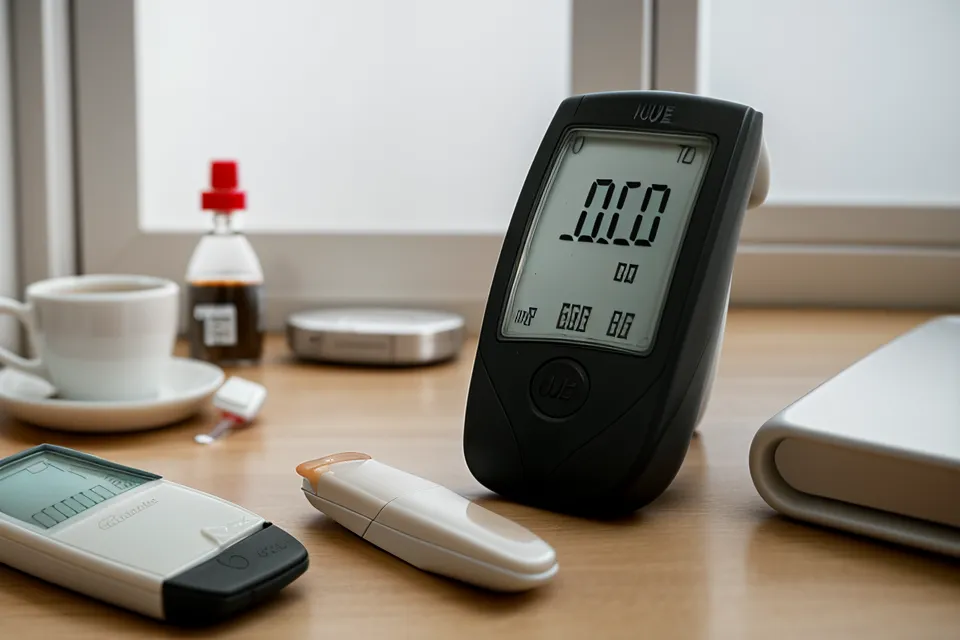
Someone always finds me at the Ponce City Market food hall once word gets around that I check my blood sugar before I order — this time it's a guy in his fifties, phone still open to his patient portal, wanting to know if a prediabetes flag on a routine physical is as bad as his doctor made it sound.
These are the same questions, more or less, whether it's a guy at the food hall or someone who emails after their own physical, so here's how I actually answer them — two years of logging readings and testing supplements, no diary entry required, just what the tracking has actually shown me.
Why Does Turning 50 Change the Blood Sugar Math?
Nobody hands you a memo when your pancreas starts working overtime. I didn't feel different at fifty than I did at forty-five — energy was fine, weight was steady — which is exactly the problem. My own A1C came back at 5.7%, just over the prediabetic line, and that single number is a lagging indicator, like getting your quarterly numbers three months after the quarter already closed. What actually changes for a lot of guys around fifty isn't one dramatic event. It's a slow drift in how well the body clears sugar after a meal, and most of us miss it because we're using how we feel as the metric instead of an actual reading.
I've got a buddy who ferments his own kombucha in the garage and treats it like a health credential — meanwhile he's never once checked a fasting number, so neither of us actually knows if it's doing him any good. That's the trap. Feeling like the healthy one and having the data to back it up are two completely different things once you're past fifty.

A Normal-Looking Lab Report Can Still Flag You
A guy can walk out of his annual physical with a clean bill of health and still be carrying a problem, because most basic panels only catch what's happening while you're fasting, not what happens two hours after a meal — I've gone deep on what a normal fasting number even looks like in another entry, so I won't rehash it here, but that number moves around more than people expect for reasons that have nothing to do with dinner the night before. Add to that the fact that "healthy" on a label doesn't mean much once you learn the glycemic index ranks how fast a food turns into blood sugar, and a bran muffin can outscore a steak dinner without anyone expecting it. If your doctor only ran one blood draw and called it good, that's a single data point, not a trend line, and I wouldn't run a business off one data point either.
The Six Weeks I Wasted on a Reddit Recommendation
Somewhere in my first year of this, I found a Reddit thread insisting that cinnamon capsules could bring fasting numbers down, backed by a chorus of people swearing it worked for them. I bought a bottle, took it every morning for six weeks, and logged my fasting reading right alongside it the whole time. Nothing moved. Not a single meaningful shift in either direction - flat as a bad sales quarter. It's the kind of variable I'd have cut after week two if this were an actual product line, but I wanted to give it a fair test, so I stuck it out the full six weeks before writing it off.
I mention it because it's the story nobody wants to hear on a supplement thread: sometimes the thing everyone swears by just doesn't do anything for your particular chemistry, and the only way to know is to actually track it instead of trusting the comment section.
Knowing When Something Actually Worked
People ask how I can tell the difference between a supplement working and just having a good day, and the honest answer is that one good reading doesn't convince me of anything. What convinces me is a meal I've eaten before, under conditions I've tracked before, coming back different — one lunch at Hudson Grille where the two-hour reading came back at 127 instead of the 151 I'd gotten off a nearly identical plate before, same kind of meal, same portion, same time of day. That's the comparison that means something, not a single morning number that happens to look good. Find a meal you eat often enough to use as a control, the same way you'd never trust one good sales week without comparing it to the same week last year.
Stress Moves the Needle More Than Diet Alone
Stress turned out to move the needle almost as much as food, and it took a while to notice because I wasn't looking for it. On days where nothing had changed about what I ate, numbers still crept up — a rough client call, a scheduling mess, that kind of thing. There's a stress hormone response involved (cortisol gets blamed for most of it, and I'll leave the deeper mechanics of how that works to a different entry), but functionally, what I noticed was enough on its own: a bad afternoon at the office can move my readings about as much as a bad meal does. Track what kind of day you're having, not just what's on your plate, or you're missing half the variables in the model.
Start Tracking Before Your Next Physical, Not After
If there's one thing I'd tell someone who just got the same phone call I did, it's to start logging before the next appointment, not after — bring data instead of just a bad feeling. I've gone deeper into some of the weirder patterns elsewhere, like why my fasting blood sugar was high after a good night's sleep, which took longer to figure out than I want to admit, and I've laid out my honest take after two years of testing blood sugar supplements for anyone deciding whether any of this is worth the shelf space. None of it replaces an actual doctor, but showing up with your own numbers instead of a guess changes the conversation completely.
The spreadsheet has gotten a little out of control by now — my wife still calls it my second business, and she's not wrong, there are tabs in there I couldn't explain to a stranger without a diagram. But the questions people ask me at Ponce City Market or wherever else I get cornered these days are never really about the spreadsheet. They're about whether a normal-feeling fifty-year-old should take one lab number seriously. My answer is yes, every time — not because the number is destiny, but because it's the first data point in a business you didn't know you were running.
This site documents one person's experience and should not be treated as expert advice. Your circumstances are unique — please consult a qualified professional before making any decisions about your health or finances.