
Five hundred sixty finger pricks. That's the running total from my personal blood sugar supplement experiment this year, and it's also why I no longer trust a three-day verdict on whether a supplement is doing anything. A1C management sounds clinical until it's your own chart with "prediabetic" written on it, and testing supplements the way I'd test any other business expense is what's kept this whole thing honest.
Quick housekeeping before the numbers: some of the links on this page are affiliate links, meaning I earn a commission if you buy through them, at no extra cost to you. I've only written about supplements I've actually run through my own testing routine. Nothing here is a sponsored post wearing a personal-experiment costume.
A routine physical is what started all of this. The doctor said "watch your sugar" and not much else, so I went home and started reading nutrition labels for the first time in my life, which is its own kind of humbling. The actual bloodwork showed an A1C of 6.3, enough to get "prediabetic" stamped on my chart. Already tracked was how that number moved during an earlier 90-day stretch, so there was already some sense of what a real trend looks like against ordinary day-to-day noise. Somewhere in that same rabbit hole came a slower realization: most of what people say online about a supplement "working" comes from somebody's gut feeling after a week or two, and that gap between gut feeling and actual trend is the reason this whole project exists.
The Myth: If a Supplement Doesn't Work Fast, It's Not Working
Calvin Brewster, a guy from my prediabetes Facebook group, texted me four days into his own Gluco6 bottle ready to call it a dud. That surprised me, because Calvin is normally the most rigorous person in that group — he cross-references his own readings against how he slept and even the weather without anyone asking him to. If a data-minded guy like Calvin writes off a supplement after four mornings, the rest of us going by feel don't stand a chance.
Here's the misconception underneath that: people assume a blood sugar supplement should announce itself the way a cup of coffee does. It shouldn't, and it mostly doesn't. Daily glucose numbers bounce around on their own — sleep, stress, and a slightly bigger dinner can swing a fasting reading more than most supplements will in the same window. Judging a bottle after four days measures noise, not the supplement. What your A1C trend looks like over several months is its own separate question, one worth reading up on rather than folding into a 28-day supplement test.
What a Fair Supplement Test Actually Requires
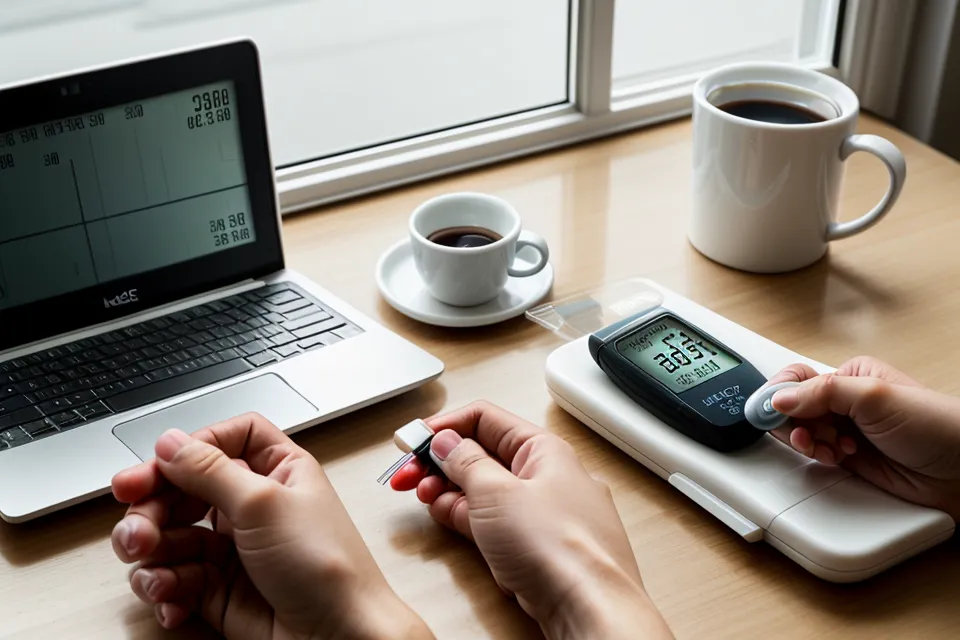
My rule, built after enough bad tests to know better, is a 28-day window per supplement with a three-day washout in between before starting the next one. Twenty-eight days is long enough to smooth out a bad night's sleep or a stressful Tuesday, and the washout keeps one supplement's tail effects from bleeding into the next test and skewing the read. Inside that window, glucose gets checked four times daily — fasting, then two hours after breakfast, lunch, and dinner — at roughly the same times every day, so the comparison is apples to apples instead of apples to whatever happened to be on the plate that day.
Outside variables get locked down too, or the test is worthless. The same evening walk around the Chastain Park trail in Buckhead runs through every single cycle, rain or not, because changing activity level mid-test would make it impossible to know whether a number moved because of the bottle or because of a sudden burst of exercise. My neighbor Sheila asked me last month why I even bother with the three-day washout, and that question is exactly what pushed me to write this protocol down instead of just running it from memory. Your fasting number on day one of any test is the baseline everything else gets compared against, and it deserves more attention than most people give it. What happens to glucose two hours after a meal is a related but separate rabbit hole, one for another day.
Six Weeks of Cinnamon Capsules Told Me Nothing
Not every failed test was a short one. A Reddit thread convinced me to try plain cinnamon capsules for six straight weeks, well past the usual 28-day window, and the fasting numbers never budged from where they started. That result matters for a different reason than the Calvin story above: more time alone doesn't make a test rigorous. Readings weren't checked at consistent times, nothing got logged with any real discipline, and the walking routine slipped that whole stretch.
Six sloppy weeks against one clean cycle. The clean cycle won, and it wasn't close.
So Where Do Sugar Defender and Gluco6 Fit Into That Protocol?
Sugar Defender went through the identical 28-day cycle with the washout on either side. It's a liquid drop rather than a capsule, which felt different at first — the usual routine leaned entirely on capsules before this. The timing worked out well enough for the schedule that I ended up carrying the drops to meetings, dosing between calls instead of at a desk. Running Sugar Defender through the full cycle, the fasting range tightened from a wide swing down to a narrower band, and by the back half of that stretch the weekly log showed every fasting number under 115 — the first run of days like that since tracking began, no lightning-bolt realization attached, just a page of numbers that finally matched each other. What the glucose meter showed each morning wasn't the only change, either — the drops replaced the afternoon espresso most days, since the usual 3 p.m. slump at the office stopped showing up the same way.

Gluco6 ran the same protocol a cycle later, in a standard capsule that's easier to toss in a truck console or a desk drawer than a dropper bottle. It leans on chromium and an ingredient called sukre rather than the usual cinnamon-only formula, and the results were solid without being dramatic — post-meal spikes came in modestly lower than baseline, a steady improvement rather than a showy one. Running Gluco6 against the drops made for an obvious next step, so a full spreadsheet comparison between Sugar Defender and Gluco6 got built afterward, because apparently a guy can't have an opinion anymore without a chart behind it.
GlucoBerry went through the same 28-day treatment later in the run. Built around maqui berry extract, it takes a different approach than the other two, and while the fasting numbers moved less with GlucoBerry, glucose recovered faster after a heavier lunch than it did on nothing at all.

Run the Protocol Before You Judge the Bottle
None of this replaces a conversation with your own doctor, and it probably doesn't replace the boring parts of testing either — the washout periods, the same-time-every-day readings, the refusal to declare a verdict on day four. Whether a continuous monitor would tell the same story faster than 560 finger pricks is a fair question and a different article entirely. There's also a separate piece already written about why supplement labels stopped getting taken at face value around here.
Anyone running their own test and looking for a place to start should know that Sugar Defender came out of these 140 days with the most consistent numbers behind it, run through the same 28-day protocol as everything else here. Give whatever you pick the full cycle before deciding anything, and write down every reading — even the boring flat ones, especially the boring flat ones. That's the part of running this like a business that actually pays off: a decision is only as good as the data behind it, and four days of data isn't a decision. It's a guess.
This site documents one person's experience and should not be treated as expert advice. Your circumstances are unique — please consult a qualified professional before making any decisions about your health or finances.