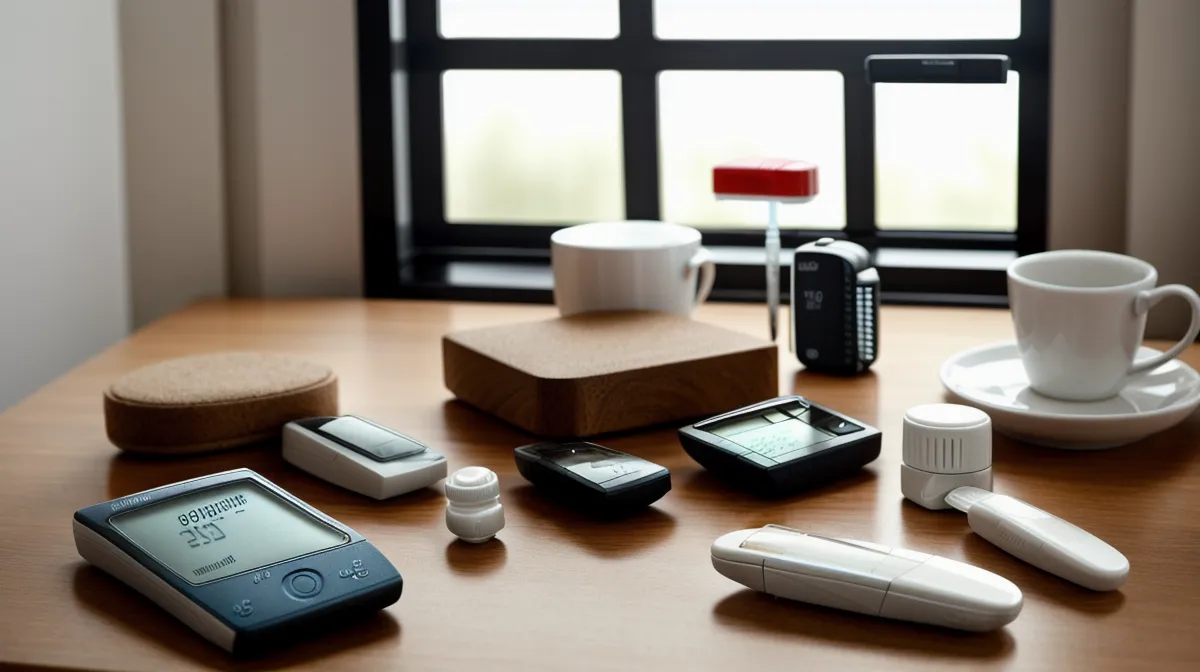
Why does a great night's sleep sometimes hand you a worse fasting number than a rough one? That's the question I hear most from people who just got flagged with a high A1C and did everything "right" the night before — early dinner, decent sleep, nothing unusual — only to watch the meter read higher than expected the next morning. It doesn't match the story most of us were told about how blood sugar is supposed to behave.
Quick disclosure up front: a few links below are affiliate links, so I earn a small commission if you buy through them, at no extra cost to you. I only write about products that have actually gone through my own testing — no shortcuts, no guesses. I've got no medical background, just a meter and a stubborn spreadsheet, so run anything here past your own doctor before you change your routine.
A routine physical is what started this whole habit, back when a doctor pointed at my A1C and used the word prediabetes for the first time. I had no idea that number came with an actual CDC threshold until I went looking — I'll leave the full breakdown of what these percentages mean to a different post, since that's a rabbit hole on its own. What stuck with me was simpler: the number on my next fasting test wasn't going to fix itself by ignoring it.
Is This the Dawn Phenomenon, or Something Else?
Ask five people why fasting numbers run high after decent sleep and you'll get five different explanations. Mine involves a lot of hand-waving toward cortisol and glycogen, but I'm going to let another post on this site handle the actual mechanism — that's not my lane, and I'd rather not butcher biology I only half-understand.
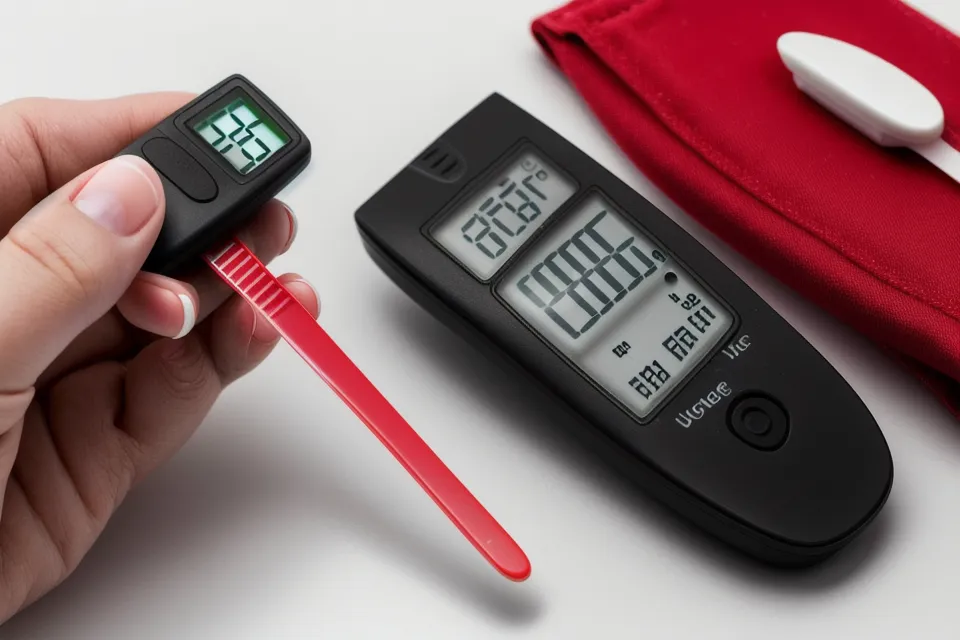
What I can tell you from the meter side: a single high reading after a good night's sleep isn't proof that anything went wrong. Calvin, a guy from the same prediabetes tracking group I joined online, logs his sleep and even the weather right next to his glucose numbers without anyone telling him to, and even he'll admit one morning rarely tells the whole story. The useful move isn't chasing an explanation for one number — it's watching whether the same pattern shows up three or four mornings running.
Why 16:8 Fasting Didn't Move My Morning Number
Sixteen-eight intermittent fasting gets recommended constantly for exactly this problem, so I gave it an honest shot — eating window closed by early evening, nothing again until midday. Here's the part nobody mentions: I didn't change a single thing about what I ate inside that window. Same meals, just compressed into fewer hours. It also meant sitting through a standing lunch meeting at Hudson Grille on Roswell Road in Sandy Springs with nothing but black coffee while the supplier worked through their plate, which turned out to be its own kind of miserable. My fasting numbers barely moved — nothing I'd call a trend, and definitely not worth the mid-morning hunger that came with it. The lesson wasn't that intermittent fasting doesn't work — it's that the schedule alone isn't the variable that matters. If the food inside the window stays the same, don't expect the number outside the window to change much either.
Liquid Drops vs. Capsules on the Morning Reading
Capsules were my starting point, mostly because that's what shows up first when you search any of this. I noticed my fasting numbers stayed erratic no matter how consistent I was about taking them before bed, and I started wondering if a capsule sitting in your stomach overnight was just too slow to matter by the time the early-morning surge hit. That's what pushed me toward liquid formats instead. I'd been reading about Sugar Defender, which uses a dropper rather than a capsule — the pitch is faster absorption, getting into your system before the overnight window closes. It lists 24 plant-based ingredients, and I won't pretend I can pronounce half of them, but I liked that the label didn't have the filler ingredients I kept seeing in cheaper bottles at the drugstore. When I stacked it up against what I'd used before, in the notes I put together for my Sugar Defender vs Gluco6 comparison, the liquid format gave me a steadier floor on the morning readings; fewer of those swings where one day looks great and the next looks like a setback.
Reading the Trend Instead of One Morning's Number
One fasting number, by itself, is a lagging indicator — it's reporting on last night's stress, last night's sleep, and whatever you ate twelve hours earlier, not some real-time verdict on your health. I remember checking my number right after finishing a call with a supplier one Thursday, kitchen bare because I hadn't gotten to breakfast yet, and the meter read 104 — a completely unremarkable number that told me nothing on its own without the stretch of readings sitting around it. My neighbor Sheila — a retired principal who doesn't hand out easy grades — once asked me why I trusted one bad morning over a solid run of decent ones. Fair question, and it's the one I try to answer for myself before I panic about a single reading now. It's the same instinct I'd apply to quality control on any other part of the business. You don't scrap a batch over one flawed unit; you watch the defect rate over time. With Sugar Defender, part of what I liked was the 180-day money-back window — six months is enough to actually watch a trend instead of overreacting to the first stretch of data. Gluco6, which I also tested, only gives you 60 days, which is fine but tighter than I'd want for something this noisy. I've also spent time with GlucoBerry, which comes at the problem from a different angle — you can read the specifics in my GlucoBerry fasting glucose review — and it's a decent reminder that there's more than one direction to attack this from.
How Long Should You Give a Supplement Before Judging It?
People ask this one more than any other, and the honest answer is longer than most of us want to hear. A handful of days of data is basically noise: sleep, stress, one bad dinner, all of it swamps whatever a supplement might be doing in that short a window. I don't get into the mechanics of what's actually inside any of these formulas here; that's its own deep dive I've saved for a separate post, since ingredient lists deserve more attention than a paragraph. What I can say is that a longer guarantee window changes how you're allowed to test. Sticking with Sugar Defender as an example, the fact that they back it with a guarantee long enough to cover a real stretch of mornings meant I wasn't forced to make a call after a couple weeks of half-decent data. You can look at the ingredient list yourself on their official site here if you want to see what's actually in the dropper before you commit to a testing window that long.
When a High Fasting Number Is Worth a Call to Your Doctor
Not every high morning number needs a spreadsheet response — some of them need an actual phone call. If your fasting readings are trending upward over time despite consistent habits, or if numbers that would have alarmed you a year ago start to feel normal, that's not a testing problem anymore. That's a conversation for a professional, not a blog written by a guy who happens to like tracking numbers. My own doctor's reaction to my last set of labs is something I wrote up separately — my doctor was pretty surprised by where the trend had gone — and that reaction mattered a lot more to me than any single morning reading ever has. Track the pattern, keep the routine boring and repeatable, and let the number that actually counts be the one your doctor signs off on, not the one that flashes on your meter at whatever hour you happen to wake up.
This site documents one person's experience and should not be treated as expert advice. Your circumstances are unique — please consult a qualified professional before making any decisions about your health or finances.