
Ninety-eight. That's the number that stopped me at the kitchen counter one morning, because my fasting reading almost never starts with a nine — it usually sat up around 112, and had for longer than I wanted to admit. The gap between those two numbers is basically why this whole site exists: testing blood sugar supplements, reading nutrition labels for the first time in my adult life, and turning a prediabetes journey into something that runs more like a small business than a health scare for a 51-year-old guy who'd never given his numbers a second thought before. My A1C had come back at 6.1 during a routine physical, which, per the A1C scale doctors use, put me just inside prediabetic territory, and blood sugar management became my new side project whether I'd signed up for it or not.
That contrast between 98 and 112 didn't happen by accident. It happened because I stopped guessing and started running actual tests, one supplement and one habit at a time, the same way I'd test a new vendor before committing real money to them. Testing blood sugar supplements as a guy who'd never read a nutrition label before this started is not glamorous work, but it uses the same quality-control instinct I bring to running my business — track the input, track the output, cut whatever doesn't perform. This piece is organized around the questions people actually ask me about that stretch of tracking, not a day-by-day diary, because honestly nobody needs to read my whole spreadsheet.
What Does an A1C of 6.1 Actually Mean?
In plain terms, it means my average blood sugar over the last few months ran a little high — high enough that my doctor wanted me watching it, not high enough to be full diabetes. I'm not going to turn this into a biology lecture; there's a separate post on this site if you want the deep dive on what the different ranges mean. What I can tell you is what it changed for me day to day: I started treating my fasting number and my post-meal number as two separate line items instead of one vague feeling of probably fine. Post-meal spikes are their own animal, and I track those separately from fasting numbers, with a whole different set of notes on what actually moves them.
Reading Nutrition Labels — The Blood Sugar Skill Nobody Warns You About
Nobody warns you that most of the real work happens in the grocery store, not the doctor's office. I do my grocery runs at the Costco on Windy Hill Road in Marietta these days, and I've turned into the guy who stands in the cereal aisle long enough that other carts have to go around me. The word organic taught me nothing useful on its own — I had to learn to read the actual numbers on the label the way I'd read a supplier's invoice instead of trusting their sales pitch. That's how I found out my morning oatmeal was spiking my blood sugar almost as badly as anything with the word dessert in the name, which is a big part of why a front-of-box claim doesn't get my trust anymore.
My next-door neighbor Sheila took one look at the color-coded spreadsheet I built to track all of this and told me it looked like homework for a job I didn't have. She still runs her whole life off a handwritten to-do list, and some weeks I genuinely envy her for it. My own system these days is a supplement shelf on the kitchen counter, lined up left to right by whatever I'm currently testing, with a laminated tracking chart taped inside the cabinet door above it that would confuse anyone who didn't build it themselves.
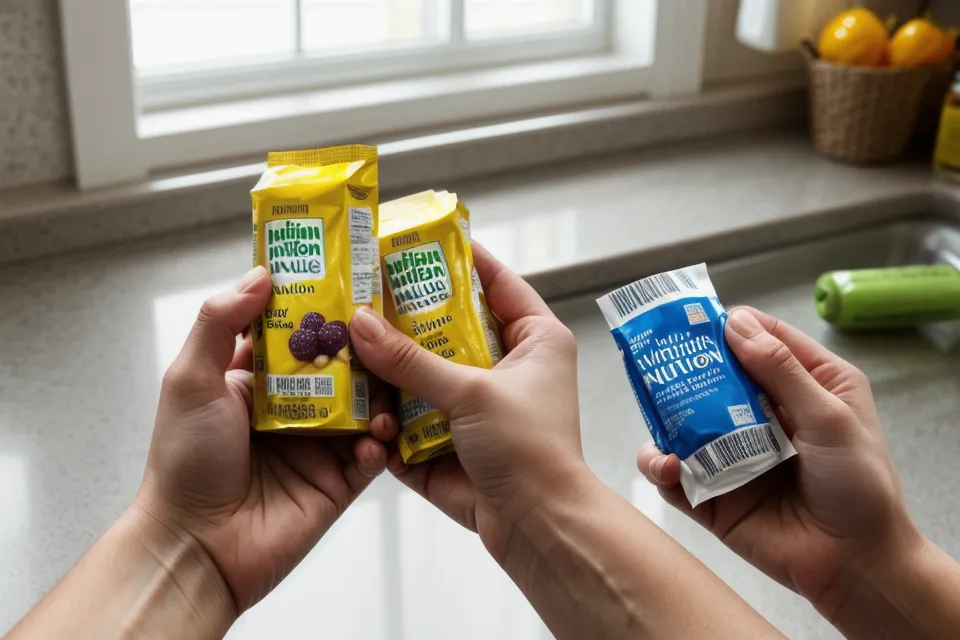
Capsules, Liquid Drops, and the Question of Which Format Sticks
Once labels stopped surprising me, the next question was which supplement format actually fit my life. I'd already written up my honest take after months of testing a long list of products, and by that point I knew capsules weren't going to work for me — I'm often out at a job site, not sitting down to a full meal I can time a capsule around, so a handful of pills I had to remember with food wasn't realistic. That's what pushed me toward liquid drops instead. Sugar Defender uses a blend of 24 plant-based ingredients in a dropper format, and what actually kept me using it wasn't some story about how the ingredients supposedly work — that mechanism-level stuff is its own topic I've written about elsewhere — it was that the 180-day money-back guarantee gave me enough runway to watch a real pattern show up instead of judging the thing after two weeks. Compare that to Gluco6, a straightforward capsule built around chromium and something called sukre, backed by a 60-day guarantee — a perfectly reasonable choice if a capsule fits your routine better than a dropper does.
A guy named Calvin Brewster, a retired HVAC technician from Smyrna I know through a prediabetes Facebook group, put it well once: he won't touch a bottle that doesn't publish a full certificate of analysis, which is exactly the instinct you'd expect from someone who spent a career signing off on equipment inspections. I came around to the same skepticism about label claims eventually — enough that it turned into its own post on this site — and by the time I trusted any single result, I'd already run a much longer stretch of day-by-day testing first, which is really the only protocol that matters: one variable at a time, or the data tells you nothing.

Why Doesn't the Same Approach Work for Every Schedule?
One family friend works the night shift as a nurse, and when I bragged to her once about my fasting numbers, she just laughed at me. Nothing she tried lined up the same way mine did, no matter how carefully she watched what she ate. Night-shift workers deal with a circadian rhythm running backwards from everyone else's, and whatever that does to a person's numbers, it clearly doesn't behave the way a normal daytime schedule does. I won't pretend to understand the mechanism behind it — only that a nine-to-five approach to blood sugar management doesn't transfer to an overnight shift.
It humbled me a little, hearing that. What works for a suburban Atlanta guy with a regular daytime schedule might not work for someone whose body thinks noon is midnight, and fasting-glucose baselines apparently shift with sleep timing more than most people assume — that's a big enough topic that I've given it a separate write-up instead of cramming it in here. Sleep in general turned out to be far more tangled up in all of this than I expected going in, which is again its own subject I've covered on its own elsewhere.
Testing the Cinnamon-Capsule Rumor from Reddit
Reddit is where a lot of these ideas start, and one that kept coming up in threads was cinnamon capsules — cheap, easy to find, and apparently a favorite home remedy according to half the comment section. I gave it a real trial: same brand, same time every morning, six weeks straight, logging every fasting reading the whole time. Nothing moved. My meter told the same story at the end of that stretch that it told on day one, and that was its own useful data point — plenty of internet buzz doesn't automatically mean a supplement does anything for your numbers.
I did the same kind of side-by-side testing with chromium vs berberine, comparing notes the same methodical way, and the sharp little snap of the lancing device before a finger prick has become such a routine sound in my kitchen that I barely register it anymore — it's just the small bell that rings right before I find out whether whatever I tried that week actually did anything.
What Would I Tell Myself on Day One?
If I could sit down with myself from that first rainy afternoon, the advice would be short: stop panicking about a single number and start tracking the trend instead. One reading doesn't tell you anything useful — a pattern over real time does. I still do finger pricks instead of a continuous monitor, partly habit and partly because I've already laid out that whole comparison in a separate post, and for someone just starting out, either method works fine as long as you're consistent about when you check.
The fasting trend is what actually convinced me something was working, not any single morning's reading. I budget for supplements the same way I budget for the shop's electric bill — if the return isn't showing up in the numbers, the product gets cut, no matter how good the marketing sounds. What's kept the dropper bottle of Sugar Defender on my counter longer than most of what I've tried comes down to something simple: it fits into a routine I actually keep up, sitting right next to the coffee maker where I won't skip it, and it's kept showing results consistent enough that I've never had a reason to stop. An A1C of 6.1 isn't a verdict — treat it like a performance review instead, and give whatever you change enough time to actually show up in the data before deciding it isn't working.
This site documents one person's experience and should not be treated as expert advice. Your circumstances are unique — please consult a qualified professional before making any decisions about your health or finances.