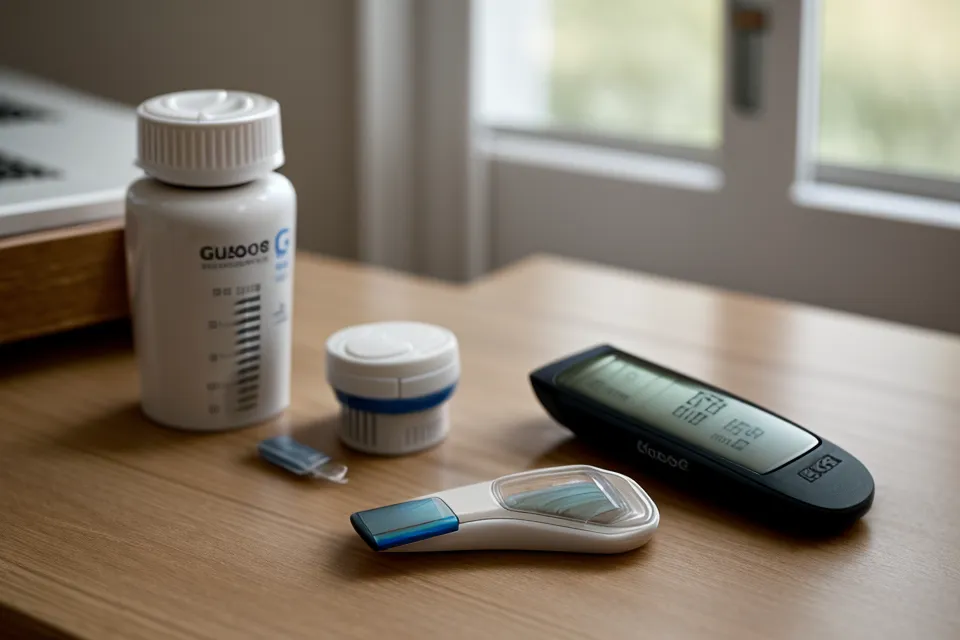
A spreadsheet and a lab result have nothing in common on the surface, but by the time my A1C came back high, I was treating both the same way — rows, columns, a number I refused to stop checking. One tracked customer orders for the packaging business I run outside Atlanta; the other tracked whether anything I was buying online for blood sugar support actually moved the needle on my glucose meter. Somewhere in between, I turned into the guy who reads a supplement label the way he'd read a vendor invoice, and that habit — more than any single bottle on my counter — is what this article is really about.
The lab result itself happened fast. A routine physical turned into a phone call two days later, my doctor reading off a glycated hemoglobin number — the A1C — that had drifted just over the line into prediabetic territory. He gave me the standard advice: cut the refined carbs, walk after dinner, watch your sugar. Then he moved on to his next patient, and I was left holding a diagnosis with no real idea what any of it meant.
What happened over the next forty-eight hours was predictable once you think about it. Search a symptom or a lab term once, and the algorithm decides you're shopping for a cure. Every feed I opened was suddenly full of actors in lab coats and testimonials promising a steady glucose line within weeks, and it felt a lot like walking onto a used car lot where every salesman swears his sedan can fly.
The Online Supplement Market Runs on Different Rules

If a vendor offered my business a forty percent margin bump overnight with no added labor cost, I'd ask for references and check their balance sheet before signing anything. A scary lab number does something to that instinct — normal skepticism goes out the window, and a checkout button starts to look like decisive action. What took me a while to realize is that buying a supplement online doesn't run through anything like the approval pipeline regular medicine does. There's a federal law covering exactly this, the Dietary Supplement Health and Education Act of 1994, and the short version is that nobody has to check the batch chemistry before that bottle lands on your porch. Once that sank in, I stopped reading the splash page — the countdown timers, the "only a few left" banners — and started reading only the small rectangular panel on the back.
None of that label-reading mattered without a baseline, so the first couple of months were just about learning to use a finger-stick monitor without burning through half a box of test strips figuring out my own technique. If you're starting from zero on home tracking, I put together a rundown of the mistakes that cost me the most strips in Common Mistakes When Using a Home Glucose Meter for the First Time — reading technique affects your numbers more than people expect.
Why More Ingredients Usually Means a Weaker Formula

Early on I fell for what I now think of as the kitchen-sink fallacy — the assumption that if one botanical extract helps, a formula with twenty of them must help twenty times more. Simple arithmetic, except it isn't. Once a brand tries to fit that many ingredients into one capsule or a two-milliliter dropper, most of them end up in amounts closer to a rounding error than an actual dose. The industry has a name for it — fairy dusting, a sprinkle of a popular herb just big enough to put on the front label.
I tested one liquid formula that advertised two dozen active ingredients right on the carton. Three weeks in, my morning readings hadn't moved out of their usual range, and when I actually sat down and did the label arithmetic, the math explained why — split that many compounds across one small bottle and almost none of them are present in an amount that would register on anything, least of all a glucose meter. That bottle is the specific thing that didn't work for me, and it's the reason I now default to formulas built around two or three ingredients instead of twenty.
Comparing two isolated ingredients against each other — Ceylon cinnamon against berberine, say — gives you cleaner signal than any all-in-one blend ever will, which is most of what I cover in Tracking Berberine and Cinnamon: What My Meter Told Me Over a Few Months.
What a 'Proprietary Blend' Hides From the Label
The phrase that makes me close a browser tab fastest is "Proprietary Blend." It's the supplement-world equivalent of a vendor invoice that shows you one total and nothing else — you can see the combined weight of five or six ingredients, but not which one is carrying ninety percent of the formula and which one is basically there for the box art. I have no way of knowing, and neither does anyone else buying that bottle, which is the entire point of writing the label that way.
A neighbor of mine, who coaches youth soccer most Saturday mornings, handed me a bottle he'd just ordered and asked what I thought of it. It took about ten seconds of reading the back panel — one proprietary blend, no ingredient broken out separately — to tell him to send it back before he even opened it.
Before I ever got serious about supplements, I spent thirty straight days on a strict keto approach, certain that cutting carbs down to almost nothing would fix the number on its own. My fasting readings barely budged past the two-week mark, which told me diet alone — at least the version I was willing to live with — wasn't going to carry the whole load by itself. Supplements became the next variable I could actually control and measure, one bottle at a time, logged next to whatever I'd eaten and however I'd slept. Around week eight of doing that, I went back through the log and noticed every single fasting reading that week — all seven days — sat under 115, which hadn't happened once in any of the weeks before it. I didn't treat it as proof of anything; one good week is one good week. But it was the first time the spreadsheet and the meter actually agreed with each other, and that's rarer than you'd think.
Capsules or Liquid Drops? I Tested Both for Months
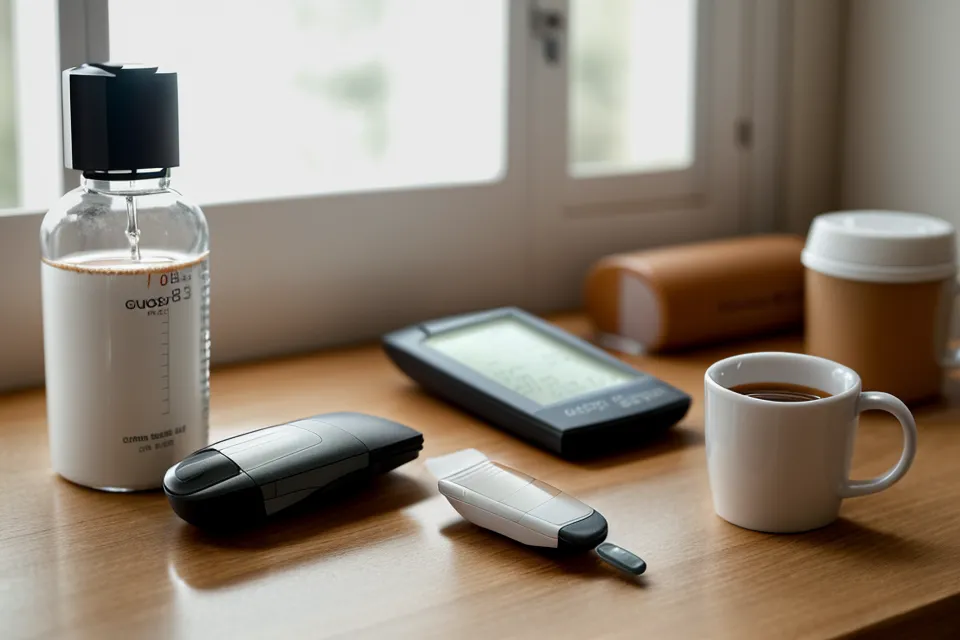
Delivery format is the other fork in the road you'll hit shopping online — capsules versus sublingual liquid drops. The marketing for drops always leans on faster absorption; the real-world trade-offs are messier than that pitch admits, between taste, dosing consistency, and how many fillers a capsule needs just to hold its shape. I spent months running both formats side by side on my counter and wrote up what actually changed in my own numbers in Late-Night Testing: Why I Switched From Capsules to Liquid Drops for My Fasting Numbers, if you want the long version.
My Five-Point Checklist Before I Buy Anything Now
By early summer I had a spreadsheet full of product specs and weekly fasting averages — because apparently I can't get through a health scare without turning it into a pivot table — and out of that came a five-point filter I run every new formula through before I type in a credit card number. First, no proprietary blends: if a brand hides behind a trademarked complex name without itemized weights, I close the tab. Second, I favor formulas built around two to four ingredients at meaningful quantities over anything cramming in twenty-plus herbs. Third, I look for standardized extract percentages on the label rather than raw plant powder, since potency swings wildly between the two. Fourth, I check for an actual third-party seal — USP, NSF International, or ConsumerLab — or at minimum a Certificate of Analysis I can pull up myself, because label skepticism only gets you so far without someone outside the company checking the batch. Fifth, I read the return policy before anything ships: a clean 60- or 90-day domestic return window beats a "365-day guarantee" that routes empty bottles back to an unlisted PO box overseas.
A testing protocol matters just as much once the bottle actually arrives — how long you give a new formula before judging it, whether you let your system reset between products, how consistently you're using the meter in the first place. That's a longer conversation than a shopping checklist can hold, and one I keep coming back to with every new formula I try.
Supplements Are a Small Lever, Not the Whole Machine
The most useful thing I've picked up in about two years of running this experiment on myself has nothing to do with botanical sourcing. It's that I wanted a transaction to fix the number — pay a flat monthly fee, take two dropperfuls before breakfast, and keep eating the way I always had. No bottle on a shelf outworks a sedentary routine and a high-glycemic diet, and no amount of label literacy changes that math.
I'm not a doctor, a dietitian, or any kind of health professional — just a packaging guy from Georgia treating his own body like the one small business he can never sell. If your own numbers are trending the wrong way, the first call belongs to your physician, not a checkout page. A clean, transparently dosed formula earns maybe five to ten percent of the credit in my own routine — a nudge alongside the brisk laps I started doing around the Chastain Park trail in Buckhead most evenings, plus sleep and the boring stuff nobody wants to click an ad for. The one rule that's carried over into everything else I test: judge the bottle by what your own numbers actually do, never by what the label promises, and you'll save real money walking away from formulas that were never going to move anything in the first place.
This site documents one person's experience and should not be treated as expert advice. Your circumstances are unique — please consult a qualified professional before making any decisions about your health or finances.