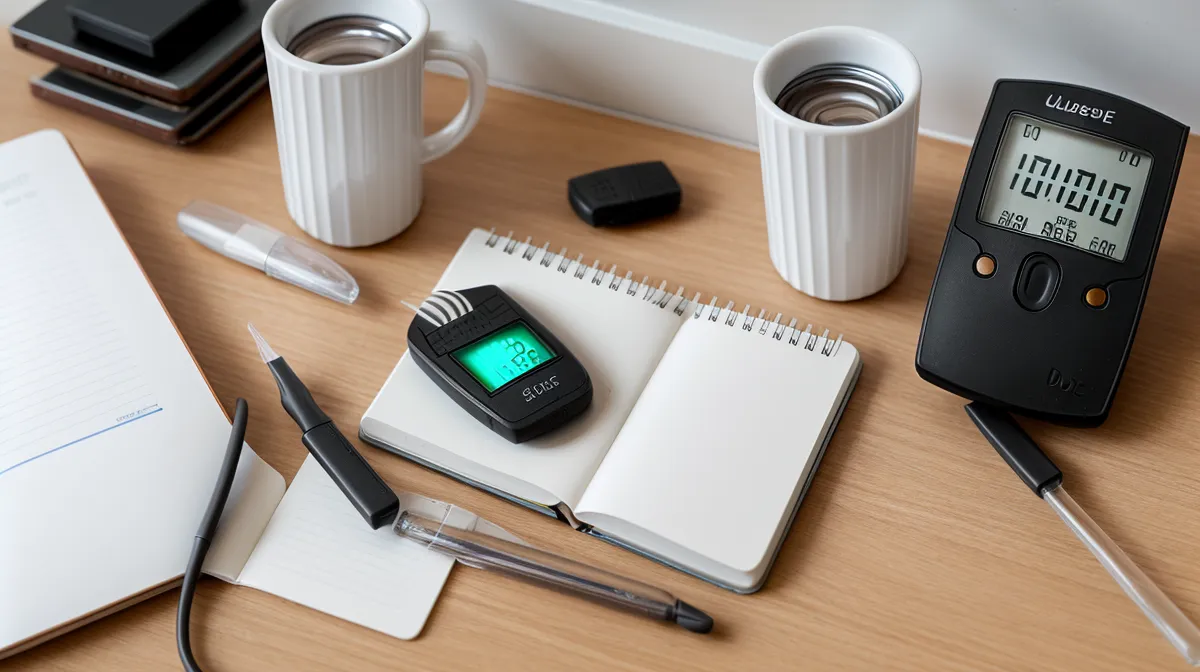
Post-lunch crashes often seem like poor sleep catching up with you, but they might actually be blood sugar numbers sliding past 170. Most people guess wrong on that for years before they ever start real glucose monitoring, and the guessing is the expensive part.
Quick housekeeping before the comparison: this site runs on affiliate links, and if you buy something through one, I earn a commission at no extra cost to you. I only write about tools and supplements I've actually tested against my own glucose meter — not whatever topped a random leaderboard. Full details sit in the transparency policy elsewhere on the site.
Which Comes First, the Feeling or the Number?
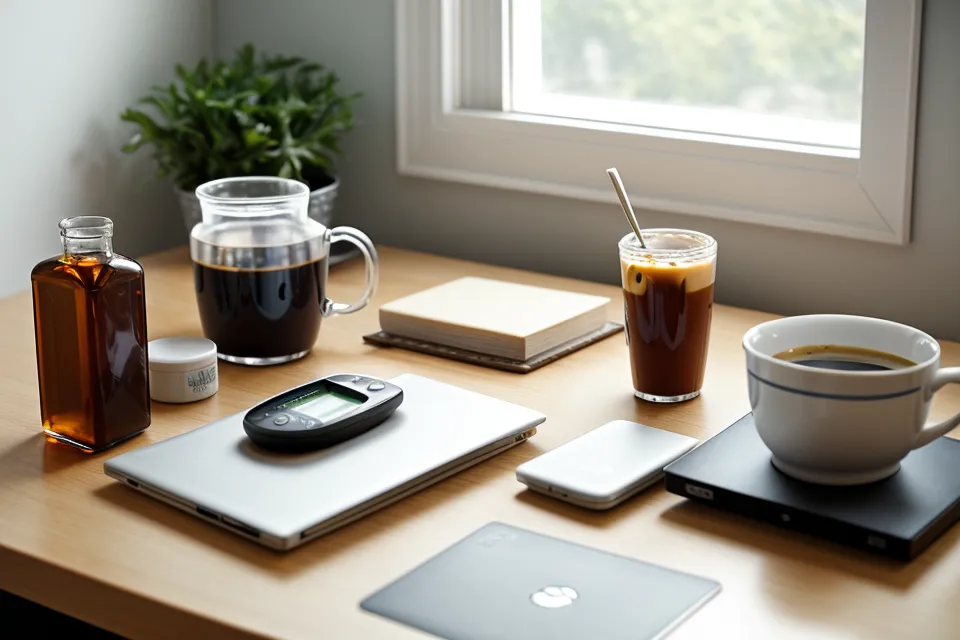
A reader named Donna Hirsch emailed me a flat question after my A1C origin story ran: should she buy a meter right away, or just pay attention to how she feels for a while first? That question is really the whole argument of this piece, because almost everyone adjusting to a new prediabetes lifestyle starts on the feelings side before they ever touch a number.
The symptom list for high blood sugar reads like a bad Tuesday at the office: sandpaper dry mouth, heavy eyelids about two hours after a meal, concentration that evaporates mid-task, and more bathroom trips than your coffee intake explains. None of that screams "blood sugar" on its own. It screams "I didn't sleep well" or "that lunch was too salty."
My friend Randall Kovic, a business acquaintance I've known since a property deal a few years back, found that out the hard way. Randall doesn't text; anything longer than two sentences and he just calls. When he called after hearing about my A1C number, he admitted something I didn't expect: he'd been quietly logging his own fasting numbers for months and had written off his own afternoon fog as "just getting older," the same way I'd written mine off as a bad lunch. He treats it now the way he'd treat a slow-paying account — a variable to watch, not a crisis to panic about.
The Symptom Side of the Case
Symptoms alone are a lagging indicator, and a noisy one. Mild dehydration, a salty dinner, or a tense call with a vendor can all produce the same fatigue and thirst that high blood sugar does. Run a business off gut feeling about cash flow instead of the actual bank statement and you'll go under eventually — treating blood sugar tracking as a gut call instead of a logged number works about as well.
Here's where I got it wrong myself. I swapped the white sandwich bread at lunch for whole-wheat and felt a little less foggy by mid-afternoon, so I assumed that one change had fixed the problem. It hadn't. When I finally checked my two-hour reading on one of those "better" days, it had barely moved. Feeling slightly less tired isn't the same data point as a lower number, and mixing the two up is an easy way to think you've solved something you haven't.
The Glucose Monitoring Side of the Case
The number side of the ledger is simpler than the symptom side, mainly because it only asks for two checkpoints a day. The first is a fasting reading, taken first thing before coffee or food — standard guidance puts normal fasting glucose under 99 mg/dL, with the prediabetes range sitting in the 100 to 125 corridor. The second is a two-hour post-meal check, timed from the start of your biggest meal, where clinical benchmarks for someone without diabetes expect a number under 140 mg/dL. That's the entire framework. No app required — just two checkpoints a day, logged in a spreadsheet so basic my accountant would laugh if she ever saw it.
If you're setting this up for the first time, most of the early noise in your numbers comes from testing technique, not biology — I wrote up the specific errors I made early on in Common Mistakes When Using a Home Glucose Meter for the First Time, and fixing those alone cleaned up my data more than any supplement did.
I'm not a doctor, an endocrinologist, or a nutritionist. I'm a guy who runs a print shop and treats his own bloodstream like an inventory audit. Talk to your own physician before changing anything based on what you read here, especially if you're already working from a diagnosis.
Numbers also correct you in directions you don't expect. I once stood in the cereal aisle at the Publix on Johnson Ferry Road in Sandy Springs for an embarrassingly long time, trying to figure out which "heart healthy" box actually had less sugar than the one next to it — a separate rabbit hole entirely. The clearer example came at my nephew's birthday party: I checked ninety minutes after a slice of cake expecting something ugly, maybe 160, bracing for the worst. The meter said 134. Lower than feared and nowhere near what my gut predicted. Guessing would have gotten that one wrong in the better direction, but guessing wrong is still guessing.
Weighing a Natural Supplement Into the Comparison

Somewhere in the middle of tightening up my own numbers, I added a third variable to track alongside the two checkpoints: a natural supplement, tested the same way I'd test any new business expense — against the actual data, not against how optimistic I felt about it. The one I ended up running longest was a liquid formula called Sugar Defender, mainly because the dropper format skipped the synthetic capsule fillers that had bothered my stomach with other blends I'd tried.
What made it easier to commit to a full evaluation was the return policy — a money-back guarantee window long enough that I wasn't rushing to judge it after a week and a half. (On cost: check their site directly, since bundle pricing shifts around and I don't track retail price changes here.) I took it every morning before coffee, logged it next to my meter readings, and treated it as one line item among several, not a miracle fix.
Even with the supplement in the mix, the two sides of this comparison didn't always agree with each other. Some mornings the number looked fine while I still felt foggy, which is its own separate rabbit hole I broke down in Signs Your Blood Sugar Is High Even If Your Meter Says Normal.
If capsules fit your morning better than a dropper under the tongue, Gluco6 is the other format I tested, built around chromium and sukre instead of a cinnamon-heavy blend. I stuck with liquid drops because they slotted into my coffee routine without a second thought, and I laid out that whole format comparison in Liquid Drops or Daily Capsules? What My Kitchen Counter Taught Me About Managing My A1C Numbers — the dropper costs you maybe five extra seconds of mess by the door, which is a trade I'll take.
Pick the Side That Matches Your Situation
Your choice depends on your situation. If you already have a diagnosis — prediabetic labs, a doctor who's used the word "borderline" — treat symptoms as a prompt to test, never as a verdict on their own. The meter outranks how you feel every time those two disagree. If you don't have a diagnosis yet and you're just noticing odd afternoon fatigue, flip that priority: the feeling is your smoke detector, and its only job is to get you to buy a meter and start the log before a doctor has to tell you to.
Donna, for what it's worth, bought a meter instead of waiting around for more symptoms to confirm anything, and she circled back later with her own log showing she'd actually stuck with it. If you're deciding where to start, the two-point framework above costs five minutes a day and tells you more than a week of guessing ever will. If you want a supplement running alongside it while you collect that data, Sugar Defender's guarantee window gives you enough runway to judge it against your own numbers instead of someone else's testimonial.
This site documents one person's experience and should not be treated as expert advice. Your circumstances are unique — please consult a qualified professional before making any decisions about your health or finances.