
134. That's what my meter showed ninety minutes after two pieces of my nephew's birthday cake, not the 160 I'd have bet on, and a solid forty points under what a plate like that usually runs for me. Something had changed in my post-meal glucose tracking that week, and it wasn't the cake. It was what I did with my feet afterward, in a yard in suburban Atlanta, twenty minutes I almost skipped — the same twenty minutes that's done more for my prediabetic numbers than any supplement I've tested.
What changed wasn't a new capsule. Two years into treating my own blood sugar like a side business — tracking numbers, testing variables, watching the return on every change I made, one mg/dL reading at a time — I'd assumed my post-meal spikes were mostly a supplement problem to solve. A routine physical is what flagged my A1C as prediabetic in the first place, and for a long stretch I ran the whole experiment through what I swallowed: berberine one month, chromium the next, a spreadsheet color-coded within an inch of its life to track which one moved the needle. None of them, on their own, touched what happened to my numbers in the two hours after a real meal.
Why My Post-Meal Numbers Weren't Moving
The first fix I tried wasn't exercise at all. Somewhere in year one, I swapped my usual bread for whole wheat and figured that alone would flatten the curve. It seemed like the obvious move, the kind of swap a nutrition label practically begs you to make. My post-meal numbers barely budged. That was its own lesson: how much sugar hides inside foods marketed as the safer choice is a rabbit hole I've gone down in more detail elsewhere, but the short version is that trading one carb for a slightly better-sounding carb doesn't do much if you don't also change what happens after the meal.
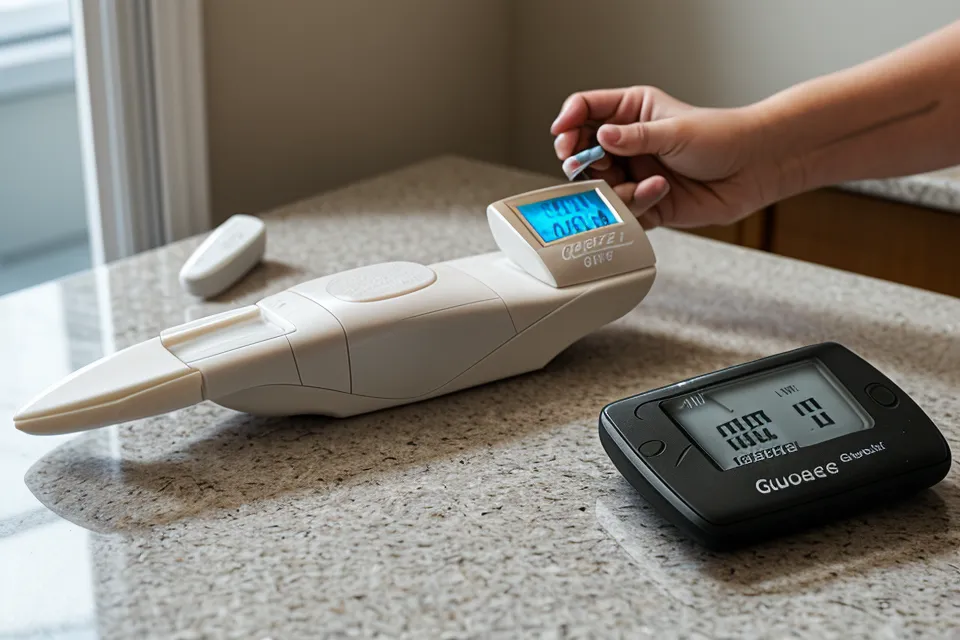
Around the same time, I was running a full month-by-month supplement testing process of my own (that log deserves its own accounting, and I've written it up in detail elsewhere), but even my best-performing capsule still left post-meal readings higher than I wanted. I knew postprandial glucose was the number that actually moved the needle, not just what I saw fasting each morning; the two barely correlate on my spreadsheet, and treating them as the same metric was probably my first mistake.
The HIIT Experiment That Backfired
Naturally, I assumed more intensity would mean a better result. That's how it usually works when you push harder on anything else in a business. So I tried a few rounds of kettlebell swings and mountain climbers about thirty minutes after a carb-heavy dinner, expecting the next reading to drop (harder is supposed to mean better, right?). Instead it climbed. I checked twice with a fresh lancet to rule out a bad strip, and the second number matched the first, higher than before I'd started moving. Whatever was going on, harder wasn't better that night — pushing my body that hard right after a meal worked against the outcome I was after, not for it.
A Twenty-Minute Walk Beats a Harder Workout
What worked was almost embarrassingly plain: a steady walk, about twenty minutes long, starting roughly half an hour after my last bite. One trial happened after a grocery run at the Publix on Johnson Ferry Road in Sandy Springs — I sat in the car finishing lunch, then walked the parking lot loop instead of driving straight home. The reading an hour later ran twenty to thirty points lower than on days I just got back in the car. Not a sprint, and not a power-walk that leaves you out of breath — closer to the pace you'd use if you were a few minutes late to a meeting and didn't want to look like you were rushing.

I've become the guy at cookouts who disappears for twenty minutes right after eating, which looks antisocial until you realize it's just data collection with a side of exercise. I've written before about how my glucose meter tells a different story than the supplement labels, and this walk-versus-supplement comparison turned into another chapter of that same argument — a good label doesn't fix bad timing, and good timing doesn't need a good label.
Timing the Walk to Beat the Spike
Timing mattered more than I expected going in. Wait two hours and the spike has already happened. That's cleanup, not prevention. Head out too soon and it feels like fighting your own digestion. Thirty to forty-five minutes after the last bite turned out to be the window that actually caught the glucose while it was still entering the bloodstream, instead of chasing it after the fact. Think of it as quality control on an assembly line: catch the defect while the part is still moving, not after it's already shipped.
Duration didn't need to be dramatic either. Fifteen to twenty minutes was usually enough to see a real drop on the meter, and on the days I only had ten minutes to spare, even that made a measurable difference over doing nothing. Consistency mattered more than any single heroic session (my term for the days I somehow found forty-five minutes). The same lesson applies when a business runs on steady, manageable orders instead of one order so big it breaks the fulfillment process.

Consistency Over Intensity
Randall Kovic, a business acquaintance who's been tracking his own numbers about as long as I have, framed it in a way that stuck with me: he asked whether a fifteen-minute walk pencils out better than a forty-five-minute one once you count what each actually returns. My numbers said yes — the short, consistent version won more often than the long, occasional one. A reader named Donna Hirsch emailed a while back, quoting her doctor almost word for word the way she always does, asking whether "just walking" after a meal could really do anything compared to a real workout. My answer, based on two years of my own readings, is that a hard workout at the wrong time can cost you more than a short walk at the right one.
The Bigger Pattern in My Numbers
My logs from late last August through this past June show the same shape every month: the stretches where the post-meal walk was non-negotiable are the stretches where my A1C held steadiest. Twelve weeks into tracking this particular pattern, the gap between walk days and no-walk days was consistent enough on the spreadsheet that I stopped calling it a coincidence. I'm still comparing how chromium vs berberine stack up over a longer stretch, but movement is what makes either of them look good on paper.
I check all of this with a plain finger-prick meter rather than a continuous sensor, a trade-off I've weighed in more detail elsewhere, and how the ingredients in any given capsule are supposed to work is a separate question I've mostly stopped trying to answer for myself. Poor sleep throws its own wrench into these numbers too. I detailed one specific disaster in my post about the late-night blood sugar crash that changed my entire approach, and it's a big part of why I no longer treat exercise and sleep as separate experiments.
If you're carrying your own prediabetic flag around suburban Atlanta or anywhere else, talk to your own doctor before you start walking laps after dinner. What works for a fifty-one-year-old business owner's metabolism isn't a prescription for yours. But the transferable part, the one lesson that held up across every experiment on this list, is simple: don't just look at what's on your plate or what's in the capsule. Look at what you're doing with your feet in the half hour after you eat. That's the variable that moved my numbers more than anything I ever swallowed.
This site documents one person's experience and should not be treated as expert advice. Your circumstances are unique — please consult a qualified professional before making any decisions about your health or finances.