Eight capsules. That's how many pills — a multivitamin, fish oil, and whatever herb was in that month's rotation — I lined up next to the coffee maker most mornings, and it's the reason half the people in my prediabetes Facebook group ask some version of the same question: does switching from capsules to liquid drops actually change anything, or does it just feel easier because there's less to swallow? Two years into supplement testing and daily blood sugar management, that question deserves a real answer instead of a one-line reply in a comment thread.
Quick disclosure before I get into it: I use affiliate links on this site, and if you buy something through one I earn a commission at no extra cost to you. I only write about things I've actually run through my own routine, checked with a glucose meter, and logged every morning. None of this replaces an actual conversation with your own doctor.
The Real Reason Eight Capsules Became a Problem
My A1C came in just over the prediabetic line during a physical I almost skipped for a client meeting, and that single number is what started the tracking, the label-reading, and the slowly growing shelf of bottles. The diagnosis wasn't actually what pushed me to switch formats, though. It was the morning I counted eight capsules waiting by the coffee maker and realized I was running a supply chain, not taking a supplement. Each bottle had its own dosing window, its own expiration date to watch, its own chance of a burp that tasted like a spice rack. Somewhere around then I started looking at liquid options, and Sugar Defender kept coming up in the tracking groups I follow.
Does the Liquid Format Actually Improve Blood Sugar Management?
Format and ingredients are two different questions, and I want to be clear I'm only answering the first one here. The label lists two dozen plant-based ingredients, and I'm not going to pretend I can vouch for what each one is doing inside my body. That's a different kind of article, and not one I'm qualified to write. What changed for me was consistency. A dropper in a glass of water is a five-second habit; four bottles with four different schedules is a decision I had to make every single morning, and some mornings I lost that argument with myself. The maker states it typically takes three to four weeks before someone notices a consistent pattern, which lines up with what I've seen in my own log — not a dramatic shift, just steadier numbers with fewer gaps in the data because I actually kept taking it.
Timing Drops Around a Workout
Standard supplement timing advice assumes you're sitting at a desk most of the day, and that assumption falls apart fast if you're not. I lift most mornings at the LA Fitness on Peachtree Industrial in Dunwoody, and capsules taken too close to a workout used to sit heavy, like they were competing with my legs for blood flow instead of doing anything useful. That's one of the patterns I dug into during my eighteen months of testing blood sugar supplements, though it's closer to two years of testing at this point. Liquid drops solved a logistics problem more than anything metabolic: a small glass of water thirty minutes before a workout doesn't sit the same way a handful of capsules does, and I stopped dreading the pre-gym routine because of it.
Weighing a 180-Day Guarantee Against a 60-Day One
Guarantees matter more to me than they probably should, but running a small business taught me that a company's return policy says something about how confident it is in its own product. Sugar Defender backs its liquid formula with a 180-day window, which gave me enough runway to judge consistency instead of panicking over week-to-week noise. Gluco6 is the capsule-based option I keep coming back to for comparison — it leans on chromium and something called sukre instead of the usual cinnamon-only formula, and its guarantee tops out at 60 days. Sixty days isn't nothing, but for someone trying to build an actual data set before deciding, the longer window is the more useful one. Neither guarantee is a reason to skip the tracking, though — a refund policy is a safety net, not a substitute for checking your own numbers.
Is the Change Real, or Just a Lighter Kitchen Counter?
Here's the part I have to separate out clearly: fewer bottles on the counter is a real quality-of-life win, but it isn't evidence on its own. The evidence sits in a spreadsheet column — the stretch where my five-day fasting average settled at 103 is the best run I've logged since I started paying attention, and that's the number I trust over how the routine feels day to day.
Not everything I've tried has held up that way. I ran 16:8 intermittent fasting for a while without changing anything else about what I ate, and my fasting numbers barely moved — a reminder that timing alone isn't much of a lever if the rest of the inputs stay the same. Every test strip still starts the same way, with that faint rubbing-alcohol sting on my fingertip right before the meter beeps, and I trust that small, boring ritual more than I trust any single good week (yes, I am the guy who color-codes his own spreadsheet, and my wife has opinions about it).
What Other Trackers in My Group Ask Me
My neighbor Sheila Dobbins asked me the most useful question anyone has raised about this switch: if the ingredient panel is basically the same, why does the format matter enough to write about? It's a fair challenge, and the honest answer is that adherence is the whole game — a supplement you skip twice a week because it's annoying isn't outperforming one you actually take every day, no matter what's in the dropper.
Calvin Brewster, a guy I know from the same prediabetes Facebook group, cross-checks his own readings against how he slept and whether a cold front came through, which is more thorough than most people bother to be. I've laid out more of my own numbers in my kitchen counter experiment for anyone who wants the raw log instead of the summary version.
So Which Format Should You Actually Buy?
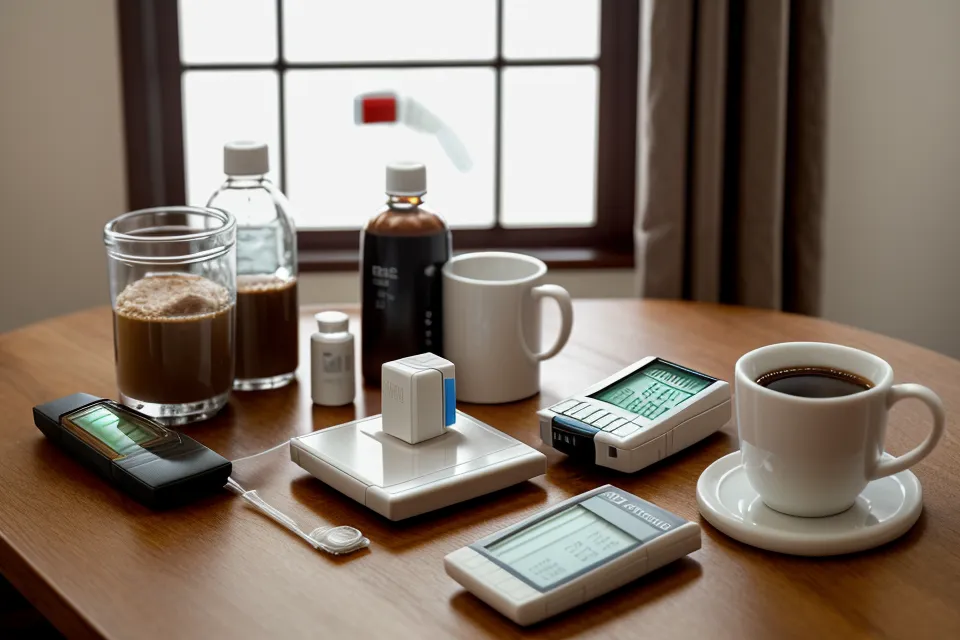
If you're standing where I was — tired of running a pharmacy out of your own kitchen just to get through breakfast — the honest answer depends on how consistent you already are with the format you have. Capsules work fine if you never skip them. Drops solved a real problem for me because they cut the friction low enough that I stopped skipping doses altogether.
You can see the option I settled on through Sugar Defender here, and the longer guarantee window makes it a reasonably low-risk way to run your own month of testing before deciding either way. Whatever you pick, keep the meter close and the spreadsheet honest — that's the only audit that actually matters here, and it's the one part of this whole experiment I'll never outsource.
This site documents one person's experience and should not be treated as expert advice. Your circumstances are unique — please consult a qualified professional before making any decisions about your health or finances.