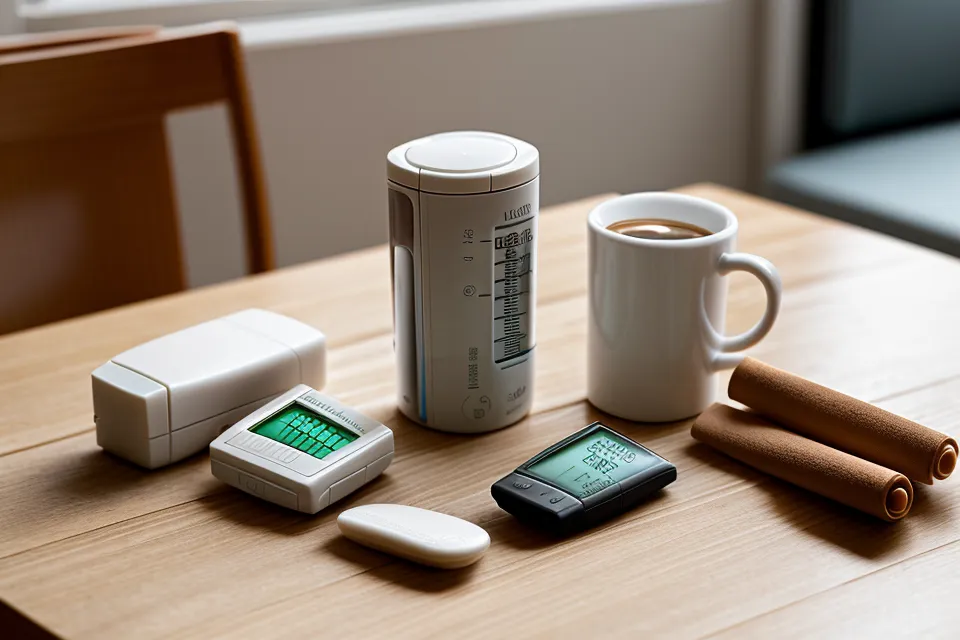
The meter beeps and says 98. Ninety-eight, on a morning that looks like every other morning, when the usual number sits closer to 112. That's the kind of reading that would convince almost anyone their newest supplement bottle is finally working, and it's exactly the moment I've learned not to trust. Glucose tracking and supplement testing, done long enough, teach you one uncomfortable lesson about prediabetes management: a single good morning proves almost nothing, and a good chunk of the "miracle pill" industry is built on convincing you otherwise.
My rule now is simple, and it's the opposite of how I used to test things: before any bottle gets credit for a number, I check what else could have written that same number. This whole habit started with a physical that came back with an A1C just over the line into "prediabetic," and a doctor who told me to watch my sugar without telling me what that actually meant day to day. The first thing I learned poking around afterward is that the FDA doesn't sign off on any of these products before they hit a shelf, so a bottle promising to fix that number hasn't cleared any bar except its own marketing department.
What that turned into, on my kitchen counter in a Cobb County ranch house, is closer to running a second business than following a diet — bottles lined up left to right by whichever one I'm currently testing, a meter and a zippered case of lancets parked next to the coffee maker because if it isn't sitting next to something I already do every morning, I won't do it. My wife still gives me a look every time a delivery shows up on the porch, and if I'm honest, the spreadsheet behind all of this has more tabs than it has any business having.
One Good Glucose Reading Proves Nothing on Its Own
A blood sugar support blend from a health food store was my first real lesson in this. The label looked promising, the reviews were glowing, and I took it long enough to get a fair read. My fasting numbers didn't move in either direction, up or down, in any way I could separate from ordinary day-to-day noise. No dramatic drop, no dramatic spike, just the same scattered range I'd been logging before I ever opened the bottle. If a product can't beat the noise floor of your own body over an ordinary stretch, it hasn't done anything, no matter what the front label promises.
Fasting numbers in the range that gets labeled prediabetic have their own baseline quirks that have nothing to do with anything swallowed the night before, a subject that deserves its own accounting rather than a paragraph here. Treating one fasting number, high or low, as a verdict on a supplement ignores how much that baseline shifts entirely on its own.

Other Factors That Affect Your Number
Sleep changes the next morning's number more than most supplements ever will, and a stressful stretch at the shop does the same thing regardless of what's in the pill bottle. Coffee is its own confounder — the timing, the amount, whether it's on an empty stomach — and I've caught myself crediting a supplement for a change that a different cup of coffee explained just as well. What's actually on the plate the night before matters too; a lighter dinner can blunt tomorrow's number all by itself, no capsule required. Even meter technique itself, the angle of the lancet, how long you wait to read the strip, introduces enough wobble that testing a supplement properly with a glucose meter means controlling for your own habits before controlling for anything else.
Hidden sugar in food you'd swear was safe is its own trap, and I found that out the hard way standing in an aisle at the Costco on Windy Hill Road in Marietta, reading the back of something I'd been eating for months on the assumption it was harmless. None of that is a supplement's fault or a supplement's credit. It's just the actual list of variables sitting on top of whatever the bottle is doing, and most of them never make it onto the label.
Same Bottle, Different Month, Completely Different Verdict
Terrence, my old college roommate and the same guy who books a restaurant reservation two weeks out and expects everyone to be grateful for the privilege, likes to test my methodology by text more than he likes to test any supplement himself. He's the one who pointed out that I'd called a berberine blend a "winner" one month and a "dud" two months later without changing anything about how I logged it: same time of day, same effort, the same spiral notebook with its ruled columns for fasting and post-meal numbers, the pen dragging a little where a page had gone soft from steam off the coffee maker. The only real difference between those two months turned out to be everything else in my life that had also changed, which is an unsatisfying answer and also the true one.
Stopping a supplement cold and watching whether the number drifts back is a better test than starting one, in my experience, because it removes the extra attention that comes with beginning something new. Running two products back to back and comparing the same stretch of readings side by side beats trusting either one in isolation. And whether the readings come from a finger-prick meter or a continuous sensor, the instrument only tells you what happened — it doesn't tell you why, which is the part everyone actually wants.
What Counts as Real Evidence
A reader named Nadine emails me every so often with her own morning numbers, and the first question she asks about any supplement I mention is almost always the exact brand and dose, before she's asked anything about how I actually tested it. The instinct makes sense: a specific product feels like an answer, and a testing method feels like homework. But the brand has never been the part that mattered. What matters is whether the same result shows up across enough comparable mornings, tested the same way, before it's allowed to change what's sitting on the shelf.
Reading an ingredient label the way I'd read a vendor invoice — the whole list, not just the front-of-package claims — has saved me from a few blends that were mostly filler, though that particular rabbit hole deserves its own write-up rather than a detour here. What's actually doing the work inside a given capsule is a separate question from whether it can be proven to be doing anything, and curiosity about the first one shouldn't talk anyone out of rigor about the second.
The Rule I Use Now
Stress deserves its own callout, because a bad week dealing with a client dispute or a late shipment shows up on the meter almost as reliably as a bad dinner does, and it's worth remembering how blood sugar spikes during high-pressure work meetings regardless of anything sitting on the kitchen counter. Treating every spike as a supplement failure, or every dip as a supplement win, means grading a test that was never actually controlled in the first place.
One reading is a data point, not a verdict: that's the whole correction, and it's a lot less exciting than a headline about a miracle ingredient. A pattern, tested the same way across enough comparable days, holding up after sleep, stress, coffee, and whatever actually got eaten are accounted for, is the closest thing to real evidence a home glucose meter can offer. That's the only standard that's earned a bottle a permanent spot on my counter instead of a trip to the donation bin, and it's the only one worth using before writing a check to any "miracle" pill.
This site documents one person's experience and should not be treated as expert advice. Your circumstances are unique — please consult a qualified professional before making any decisions about your health or finances.