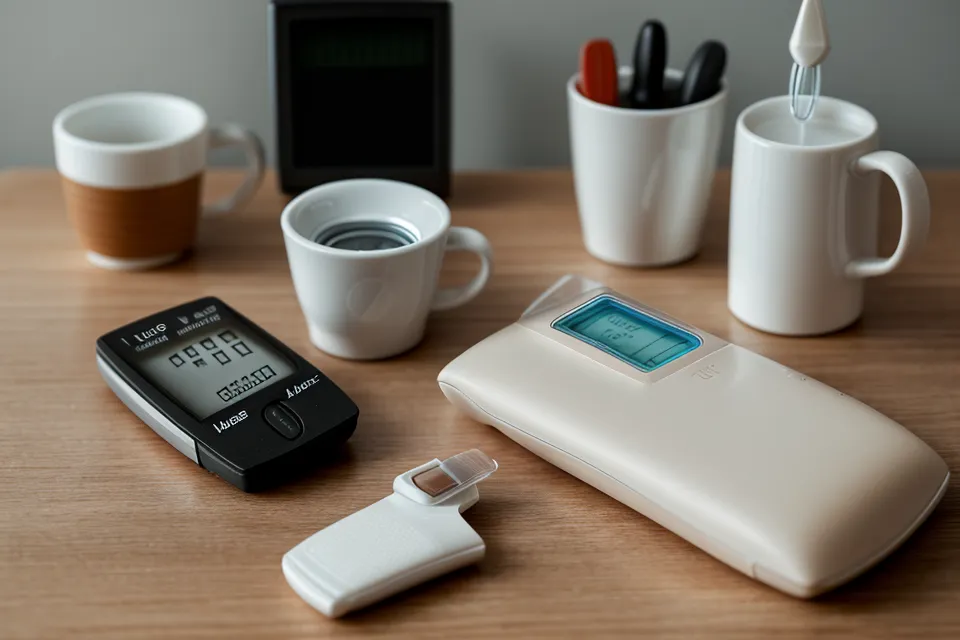
Six weeks of cinnamon capsules — the dosage a Reddit thread swore by — moved my fasting glucose by exactly nothing. Not up, not down. That's not an opinion, that's just a column of numbers in my spreadsheet that refused to budge no matter how religiously I took the pills. I'd landed on cinnamon after an A1C reading, the hemoglobin test my doctor ordered, came back at 5.7%, which was enough for him to use the word "prediabetic" and send me home with nothing more specific than "watch your sugar." Watching my sugar is what I've done since, with a glucose meter, a notebook, and more supplement bottles than any kitchen counter should reasonably hold. This is the summer I gave up on cinnamon and started testing berberine instead, and what my glucose monitoring actually showed once I stopped assuming one natural supplement behaves like the last one.
Running this like a business is the only way I've managed to stay consistent with it — every meal is a line item, every bottle on the counter is a cost center, and the meter is the auditor that doesn't accept excuses. My wife still calls it my second business, usually while relocating another shipment of capsules so she can find the coffee maker. I've become the guy who shows up to a cookout with his plate already made, which is its own kind of surrender, but if I want my fasting number anywhere near the normal fasting glucose upper limit, surrender beats denial.
The Six-Week Cinnamon Test That Went Nowhere
The cinnamon phase started because a Reddit thread full of confident strangers swore by it, and because Ceylon versus the cheaper Cassia stuff turned out to be its own small rabbit hole — I wrote up that whole tracking my results after a season of suburban cookouts separately, so I won't repeat the play-by-play here. What matters is that six weeks of the "right" cinnamon, taken on schedule every single day, did not move my fasting glucose in any direction I could honestly call progress. My numbers sat exactly where they'd been before I started, which is its own kind of answer, just not the one I was hoping to write down.
Clearing the Shelf for Berberine
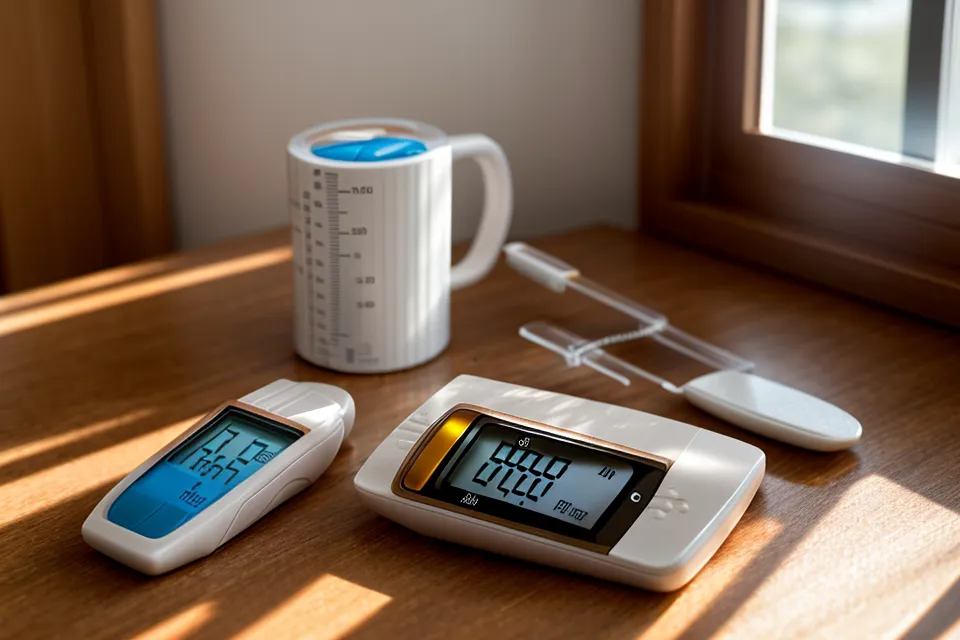
By the time I moved on, the supplement shelf on my counter had its own quiet rotation system — whatever I was actively testing got the spot closest to the coffee maker, everything else got pushed to the back. Berberine took that spot at 500mg, three times a day, and I left every other variable alone: the walk after dinner, no late snacking, the same finger prick each morning logged into the same notebook, its columns already worn soft from how often I flip through them.
Reading labels is its own skill, and not a fun one. I'd already written about the filler trap and why the meter doesn't lie when cheaper capsules pad their count with something you don't actually want in your body. The same rule applied here: fewer filler ingredients, not a bigger number printed on the label.
Why Taking It on an Empty Stomach Backfired
About four weeks in, my fasting number did something I didn't expect. It climbed from its usual mid-100s up to 118 on the mornings I'd taken berberine before eating anything at all. That felt like a straight violation of whatever return I thought I was owed. I never got a clean explanation for why skipping food first pushed the number the wrong way instead of the right one, and I'm not going to pretend I reverse-engineered the biology behind it — I just know what the meter told me, and the meter said empty-stomach mornings were a bad idea.
Once I started taking the same dose alongside an actual meal, something with fiber and protein in it rather than just toast, the numbers moved the direction I'd been hoping for. It wasn't dramatic. A few points here, a few points there, the kind of improvement that would never make a headline but matters a great deal when you're the one staring at the spreadsheet every morning. Exercise was the one thing I refused to touch through all of this, same route, same timing, because changing two variables at once means you can't trust what actually moved the number. I get into that more in my tracking notes regarding natural support after a year of monitoring, if you want the longer version, and somewhere in there I also started timing my Publix runs on Johnson Ferry Road around whatever that week's meals actually needed, a sentence I never pictured myself saying out loud.

A Birthday Cake, and a Number I Didn't Expect
My nephew's birthday landed right in the middle of all this, which meant real cake, not a modified version, because I wasn't about to be the guy who brings his own dessert to a seven-year-old's party. Ninety minutes after a slice I checked anyway, mostly out of habit at that point, and the meter read 134. Every other time I'd tracked a dessert like that, the number that came back was closer to 160. That gap is the first moment all summer I actually believed berberine was doing something, instead of just hoping the spreadsheet would eventually agree with me.
A neighbor who ferments his own kombucha in the garage asked if I'd tried that instead of capsules, and I told him I'd stick to whatever I could actually measure. That's the whole approach, really. I don't care what sounds reasonable at a backyard fence, I care what the meter says the next morning.
What My Glucose Monitoring Actually Told Me
Seven weeks into the berberine test, my fasting numbers were sitting lower more consistently than they ever had on cinnamon, and the gap between a rough meal and a forgettable one had narrowed enough that even my spreadsheet, which I'll admit I check more often than is strictly healthy, stopped looking like a cry for help. My A1C isn't where my doctor would call it a non-issue, and berberine isn't a stand-in for whatever your own doctor tells you to do. I keep saying that because I mean it, not because I'm required to.
If there's one thing worth carrying out of this particular test, it's that the supplement mattered less than I expected and the timing mattered more: change one variable at a time, and don't judge any natural supplement's return until you've tried it both with food and without, because for me that single detail outweighed the difference between cinnamon and berberine altogether.
This site documents one person's experience and should not be treated as expert advice. Your circumstances are unique — please consult a qualified professional before making any decisions about your health or finances.