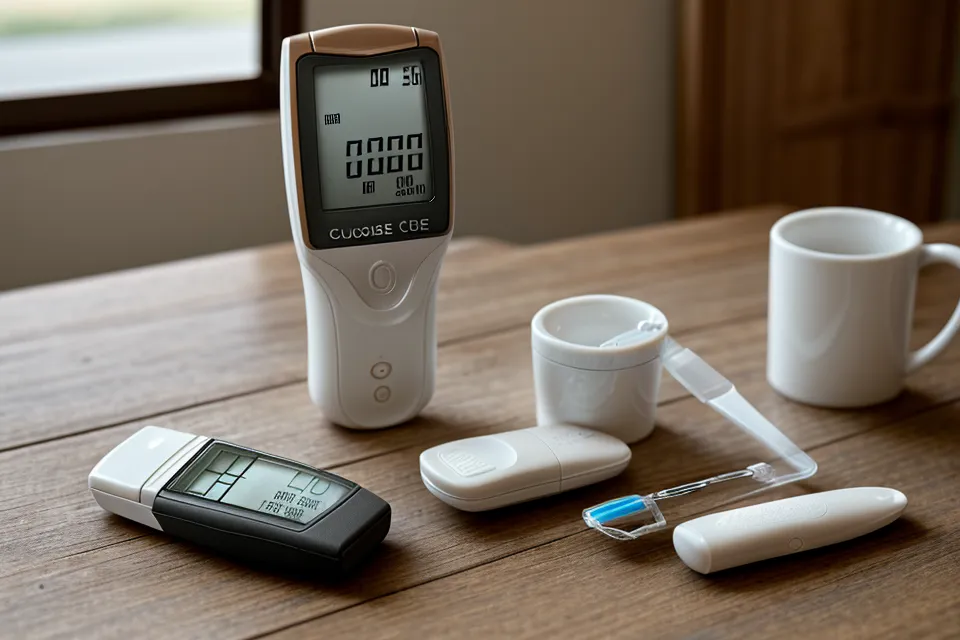
My spiral notebook has outlasted three different phone apps, and it never once asked me to rate my mood before letting me log a number.
Two years into comparing supplement bottles against that same notebook, blood sugar management has turned out to be less about discipline and more about which tracking tool survives a bad week — glucose monitoring only works if the system around it doesn't collapse the first time you're tired or busy.
Quick disclosure before we go any further: this site runs on affiliate links, including one for Sugar Defender, the liquid supplement currently at the center of my test cycle. Buy through that link and I earn a small commission at no extra cost to you — I only link to things I've actually run through my own glucose meter. I have zero medical training, just a notebook and an unreasonable number of bottles on the counter, so talk to your own doctor before changing anything about your routine. You can find my full transparency policy here.
The A1C Number That Started Two Years of Side-By-Side Testing
A little over two years ago, a routine physical put a number in front of me that I didn't understand yet: a prediabetic-range hemoglobin A1C of 5.7%, with a doctor's only follow-up advice being to "watch my sugar."
That instruction is a little like a banker telling you to "watch your money" and then walking off. In my regular business, when a number crosses a threshold like that, you don't watch it — you audit the whole operation and figure out which line item moved.
Fasting numbers became the first real target, specifically getting fasting blood sugar back under the normal upper line of 99 mg/dL, and for that first stretch I wasn't picky about method — capsules, powders, and teas all got run through the same rough audit, just trying to stop the number from climbing every month.

Notebook or App Tracking
An app seemed like the obvious shortcut. I downloaded a meal-tracking wellness app early in that first stretch, the kind that promised to log everything automatically, and gave up on it after about two weeks — not because it crashed, but because typing in every meal felt like clocking into a second shift on top of the business I already run. A notebook doesn't send a push notification guilting you for skipping a day.
What stuck instead was lower-tech: a spiral notebook with two ruled columns, one for the fasting number and one for whatever I'd eaten two hours before the post-meal check. The meter and lancets live in a black zip pouch by the coffee maker, closer at hand than my laptop; supplement bottles get lined up left to right on the kitchen counter in whatever order matches the current test cycle, so I always know which bottle I'm actually evaluating without scrolling through an app's history. A laminated chart taped inside the cabinet door above the counter reminds me what "normal" is supposed to look like on mornings when my brain is too tired to do the math.
A typical day still follows roughly that same shape: a fasting check first thing, the dropper sometime mid-morning once coffee's out of the way, hydration and label-reading running in the background all day (no hidden maltodextrin sneaking into anything marked "sugar-free"), and a short review each evening of what the next day's schedule needs to account for.
The lancing pen still does the same little snap-click a half second before the drop beads up on the strip, and that tiny ritual is oddly the part of the whole system I trust most — it doesn't lie, doesn't need WiFi, and doesn't try to upsell me on a premium subscription tier.
That week every fasting reading in that notebook finally sat under 115 for the first time, it felt like the notebook had quietly done more work than any app I'd tried.
Terrence Odum, my college roommate who now runs his own IT consulting shop, texts me every so often questioning the whole method. He's the type who books a dinner reservation two weeks out and expects everyone to be thrilled about it, and he brings roughly that same advance-planning energy to picking apart my notebook logic — his usual argument is that an app would just run the comparison for me automatically. My counterargument is that the two weeks I spent on that exact kind of app are why I don't trust an automated summary over my own columns.
A reader named Nadine Wortman found the site after Googling an explanation for the dawn phenomenon, and she emails every few months with her own fasting numbers. She won't try a single supplement without asking for the exact brand and dose first, which used to strike me as overly cautious until I realized it's just label-reading applied one step earlier than most people bother to go.
Supplement Testing: Capsules Versus the Drops Under My Tongue
Capsules were the default for that first stretch of testing, mostly because that's what every ad shows someone holding. Switching to a liquid format changed the comparison more than expected: Sugar Defender uses a dropper instead of a pill, built around 24 plant-based ingredients with no synthetic fillers in the mix, and the idea is that a liquid held under the tongue skips some of the digestion a capsule has to survive first.
Verifying absorption rates isn't something a kitchen notebook can do — there's no lab equipment on this counter, just a meter and two columns — but comparing two sets of numbers over time is well within reach, and the post-meal column looked steadier once the dropper replaced the pills.
That herbal sweetness under the tongue every morning before coffee took some getting used to, not pleasant exactly, but distinctive enough that forgetting a dose became almost impossible, unlike the capsule that used to rattle around unnoticed at the bottom of a pill organizer. The 180-day money-back window mattered more than the ingredient list in practical terms: a test period that long allowed three or four full cycles of real numbers instead of a verdict based on two unusually good weeks.
Trail Days Change the Comparison
Exercise turned out to be a variable no bottle's instructions ever mentioned. Long trail walks at Chastain Park in Buckhead, the kind that run well past an hour, change how any supplement shows up in a post-activity reading, and that mismatch didn't register the first few times it happened.
One afternoon after a longer loop than usual there, the number came back lower than expected — low enough to understand why some people describe a hard workout as competing with a supplement for the same job. Moving the dropper to mid-morning on trail days, and to right after the walk on days it actually happened, fixed most of that mismatch.
That adjustment is exactly why other people's dosing schedules shouldn't be copied blindly off a bottle built for a stranger's routine — it's part of why I keep telling people to track their own numbers instead of mine.
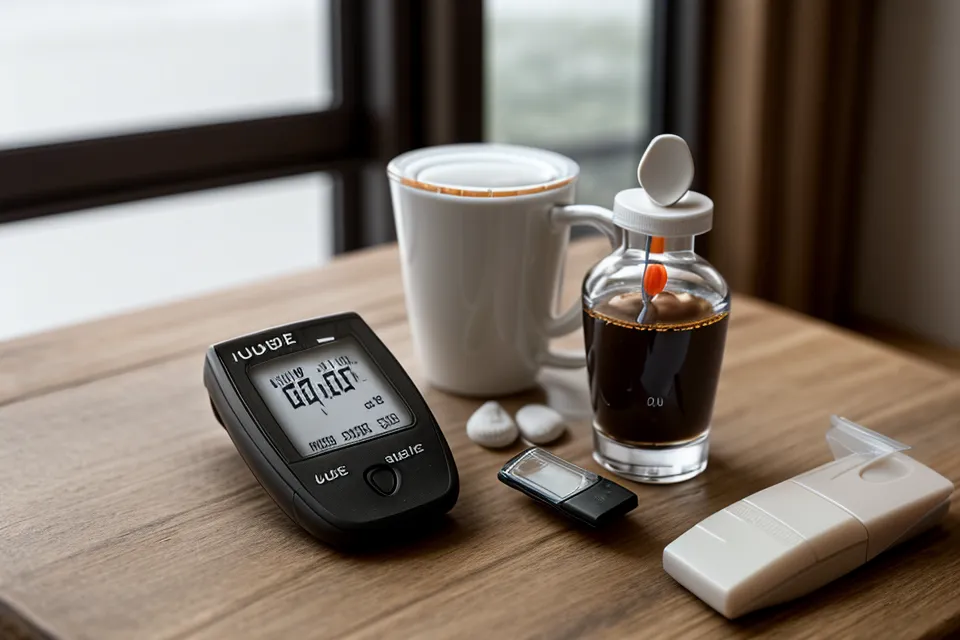
Sugar Defender at Home, Gluco6 in the Travel Bag
Numbers through late summer settled into the mid-90s on an empty stomach, comfortably under that 99 mg/dL line, and the early-morning spike some people call the dawn phenomenon showed up noticeably softer than it had when this notebook habit started.
Work stress moved those same numbers around more than expected too, which is its own comparison worth reading separately if that applies to you — see how work stress impacts daily readings — but for this notebook, it was close enough to a confounding factor that a single rough morning stopped meaning much without checking the whole week around it.
Home is where the dropper lives, but a bottle of Gluco6 stays zipped into the travel bag for hotel trips, mostly because a capsule built around chromium and an ingredient called sukre doesn't need a clean surface and a steady hand the way a dropper does in an unfamiliar bathroom.
The 60-day guarantee on that one is shorter than the 180 days at home, and the formula leans harder on insulin sensitivity than on the fasting-and-post-meal combination Sugar Defender targets — different enough that the two don't get treated as interchangeable, just as two tools suited to two different environments.
Picking Your System
Neither the app nor the notebook, the capsule nor the drops win cleanly. A notebook and a basic meter will out-survive almost any app for someone who already runs on checklists and rarely skips a recurring task, because the friction of opening an app and scrolling past ads adds up faster than writing two numbers on a page. Someone who needs a buzz on their wrist to do anything consistently might get further with the exact app that failed here — it failed for my habits, not necessarily for everyone's.
Capsules make more sense away from your own kitchen, when fussing with a dropper isn't realistic; drops make more sense at home, where a routine can actually form around them. The honest move is picking whichever version of each comparison matches how you actually live, not the one that photographs best on a supplement website.
None of this makes me any kind of health guru, and keeping a notebook for this long hasn't cured anything — it's just made the numbers less mysterious than they were the day that 5.7% result first showed up. A lab report handing you a number you don't like is a reasonable place to start tracking, choosing whichever method will still be running in three months, not the one that looks most impressive on day one. Sugar Defender is the one currently in rotation on this counter for the supplement side of that comparison, and checking current availability on the official site is a reasonable next step if a liquid format fits how you'd actually use it — just keep whichever notebook or app gets chosen updated enough to tell the truth.
This site documents one person's experience and should not be treated as expert advice. Your circumstances are unique — please consult a qualified professional before making any decisions about your health or finances.