
The case wouldn't budge on the first pull, and I stood there recalculating whether I actually needed all nine cans before I tried again. My forearms felt like they belonged to someone else. Only once it was finally in the cart did it register where I even was — the Costco on Windy Hill Road in Marietta — and the whole drive home I kept circling one uncomfortable fact: my morning blood sugar testing had never looked better, and my grip had never felt weaker, at once. That's the kind of berberine side effect nobody mentions when a natural supplement gets credit for muscle retention it might not actually deserve.
Full disclosure before any of that: this site runs on affiliate links, including a few for supplements mentioned further down, and if you click through and buy something I earn a commission at no added cost to you. That arrangement doesn't change what gets reported here. I'm not a doctor, a trainer, or anyone with letters after his name — just a guy whose A1C came in at 5.7% at a routine physical and decided to run the problem like a business problem.
The Myth About a 'Good' Glucose Number
Search berberine and muscle loss and you'll land in one of two camps. One says it's nothing to worry about because berberine is natural, and 'natural' apparently means risk-free by default. The other says it wrecked their strength overnight and they'll never touch it again. Neither camp is asking the question that actually matters, which is whether a falling number on your meter tells you anything about what else is changing in your body at the same time. In my experience, it doesn't — not on its own.
That's the myth I want to correct here: a good glucose number is not a finished scoreboard. It's one column on a much longer spreadsheet (I do actually keep a spreadsheet for this, which either makes me disciplined or makes me a guy who needs a hobby — my wife has opinions on which). Berberine can absolutely bring a fasting number down. What it does to the rest of your body while it's doing that is a separate question, and it's the one most reviews skip entirely.
Why Didn't Apple Cider Vinegar Move My Numbers?
Apple cider vinegar shots were the first thing I tried, a shot glass of the stuff every morning for three straight weeks before I'd even heard of berberine. Nothing happened. My fasting numbers sat exactly where they'd been sitting, and the only thing that changed was my tolerance for drinking something that tastes like a mistake before breakfast. I mention it because it's the kind of result nobody posts online — a clean, boring failure — and it's part of why I trust my own meter more than I trust a headline.
Berberine was different, at least on the glucose side. At a standard dose, my fasting numbers moved out of the low 110s into a range that read as comfortably normal instead of borderline. On paper, that's a win. I logged it as a win, in a spreadsheet column labeled, unimaginatively, 'wins.' But 'on paper' is doing a lot of work in that sentence.
The Berberine Side Effect My Meter Never Showed
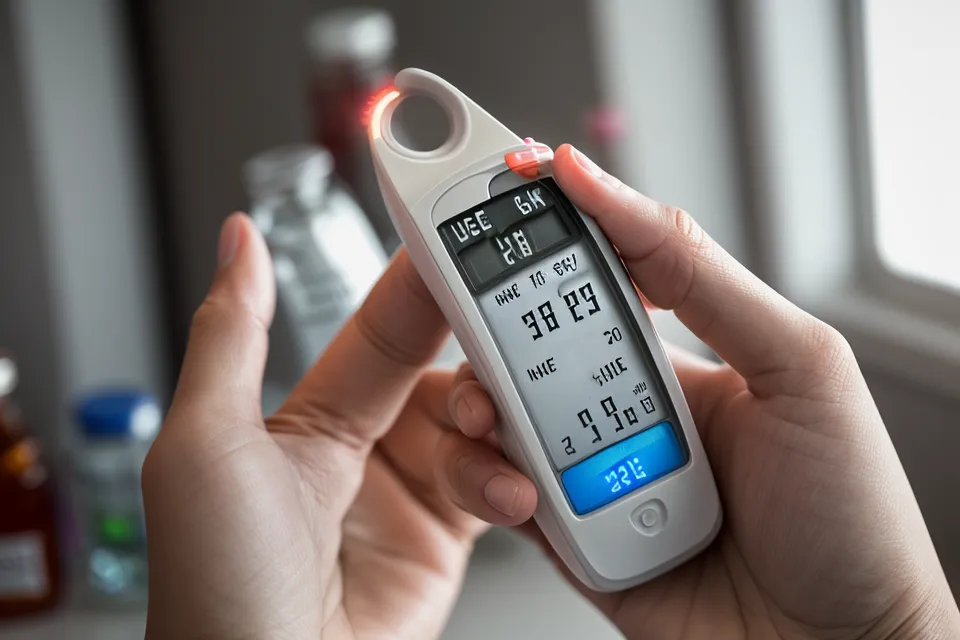
The meter does its countdown chirp, holds for that irritating half-second pause, then resolves at 98 instead of the 112 I'd been seeing most mornings, before I'd even eaten anything. That's a genuinely good reading. It's also the exact morning I noticed my shirt sleeves had gone loose across the shoulders, in a way that had nothing to do with a diet.
Costco trip, loose shirt, great glucose number — three data points that don't belong together if the popular story about 'natural equals harmless' were actually true. Something was trading against something else, and I didn't have a name for it beyond 'my strength trended down while my sugar trended down, and that's not a coincidence I'm comfortable ignoring.'
I'm not going to pretend I can explain the biology better than the actual research does — there's a whole pathway involved, the kind you'll find if you look up AMPK and mTOR, and I'll leave that explanation to people with the credentials for it. What I can tell you is what showed up on my own tracking: the better my fasting number got, the more my grip strength and my energy in the garage gym seemed to slide the other direction.
Things Worth Tracking Besides Glucose
So here's the correction, the part most posts on this topic skip: a good glucose number is necessary, but it's not sufficient, and treating it as the whole scoreboard is the actual mistake here, not berberine itself. Once I started paying attention, I added a second column to that spreadsheet for how many push-ups I could do without stopping, and a third for how heavy the grocery unload felt on a scale of one to miserable. If glucose is dropping and both of those are also dropping, that's information. If glucose is dropping and the other two are holding steady, that's different information entirely.
Timing turned out to matter more than I expected. I moved my dose away from my workout window instead of taking it right before lifting anything, and the 'flat' feeling in the garage eased up without giving back the glucose improvement. I can't prove that's cause and effect with a sample size of one guy and a dumbbell rack, but it's the kind of adjustment worth testing before assuming a supplement is the sole villain.
None of this happens in isolation, either. How you actually read an A1C result is its own conversation, and a fasting number only means something once you know your own baseline going in. Post-meal spikes are a completely different animal from fasting numbers and deserve their own tracking column. I've gotten stricter about how long I let a new bottle run before I trust any change, and just as strict about reading past the front-of-label claims to the actual ingredient panel underneath. I still reach for a finger-prick meter over a continuous monitor, which is an argument for another day. Sleep threw my numbers off more than any supplement did, and sugar hiding in food I assumed was safe did too — both longer stories I'm saving for their own posts.
Balanced Formulas Changed How I Test This
That's part of why I moved away from betting everything on one aggressive single-ingredient approach and started looking at formulas built from more than one lever. Sugar Defender was the first one I tried in that category — it leans on two dozen plant-based ingredients rather than one mega-dose, and it comes with a 180-day money-back window, which in small-business terms is a longer trial period than most vendors will ever offer me. I put it side by side with a competitor in my notes on Sugar Defender vs Gluco6, comparing drops against capsules and how each one showed up on my daily readings. If you want the ingredient-level version of this same question — what berberine specifically appeared to be doing to body composition while the glucose side was improving — I went deeper on that in my blood-sugar supplement ingredients explained notes.
Gluco6 was the next formula I tested, and you can reach it at Gluco6 — built around chromium and sukre instead of the usual cinnamon-heavy blend, and it carries a 60-day guarantee, enough time to see whether strength holds up while the sugar number comes down. GlucoBerry, over at GlucoBerry, took yet another angle, using maqui berry extract aimed at a different mechanism than straight insulin sensitivity, and I didn't get that same running-on-empty feeling while testing it. I logged the fasting-side results from that one separately in GlucoBerry and fasting glucose.
Watch More Than the Meter
Terrence, my old college roommate who's turned my testing methodology into a personal hobby of his own, texted halfway through all this to ask whether I'd controlled for anything — right before asking if I'd locked in a dinner reservation yet for a thing two weeks out, because that's how far ahead he plans everything and he expects the rest of us to be grateful for the notice. Nadine, a reader who's been emailing her own fasting numbers for a while now, asked for the exact brand and dose before she'd try any of this herself, which is probably the more scientifically sound approach of the two.
If you take one thing from all this, make it a rule instead of a warning: don't let a single number decide whether a supplement is working for you. Track something physical alongside the meter — grip, a push-up count, how the grocery haul feels — for as long as you're testing anything that touches your glucose, berberine included. A good fasting number and a strength number moving in opposite directions is a signal to adjust dosing or timing, not proof that natural supplements are secretly dangerous, and not proof they're harmless either. I've stuck with the liquid version of Sugar Defender as my current daily pick for that reason, but the bigger point survives even if you never buy a bottle of anything: watch more than one column, and talk to your own doctor before you make any of this a habit, because he's got the actual medical degree and I've just got a meter and a very detailed spreadsheet.
This site documents one person's experience and should not be treated as expert advice. Your circumstances are unique — please consult a qualified professional before making any decisions about your health or finances.