
Three meters. One drop of blood. Three different numbers on the same morning — and that gap is where I first learned the biggest myth guys over 50 believe about testing natural blood sugar supplements: that one reading, good or bad, tells you whether whatever bottle you just started is actually doing anything.
Quick housekeeping before the myth-busting: several of the links below are affiliate links, and if you buy through one I get a commission at no extra cost to you. I'm not a doctor, a dietitian, or any kind of health professional — I'm a business owner who got spooked by a number on a lab report and started treating my own glucose data the way I'd treat a vendor scorecard (my wife calls this whole thing my second business, and honestly, the spreadsheet alone probably qualifies). Nothing here replaces an actual conversation with your doctor.
The Myth That Wastes Months of Blood Sugar Testing
Here's the myth: you start a new supplement, check your fasting number the next morning, and treat that single number as the verdict. Better, and the bottle's a keeper. Same or worse, you toss it and move to the next one. That's how I ran my first few tests, and it's a terrible way to run an experiment — the kind of decision-making that would get you fired from an actual quality-control job.
A fasting number moves for reasons that have nothing to do with whatever you swallowed the day before. A rough night's sleep can push your morning reading up more than most supplements can pull it down. A stressful stretch of back-to-back meetings does something similar — enough that it's worth tracking on its own. Coffee timing matters too; a cup downed right before you test can quietly shift the number before you've connected the dots. Alcohol the night before behaves the same way, nudging the morning reading even when you felt fine going to bed. None of that is the supplement talking — it's noise, and if you don't account for it, you'll end up crediting or blaming a bottle for something your sleep, your calendar, or your coffee did instead.
So What Actually Tells You a Supplement Is Working?
The honest answer is a trend, not a single reading. A1C itself is another number people over-read the same way — I get into what the A1C number actually tracks in a separate piece, so here I'll just flag that the same one-reading trap applies to it too. Your fasting number is a baseline reading of where your body sits before food enters the picture, and it answers a different question than your post-meal number, which is about how hard a specific plate of food hit you an hour or two later — a supplement that helps one doesn't automatically help the other, so judging a bottle on a single kind of reading is already half the mistake.
Meter technique matters too — the swab, the small sting, that faint rubbing-alcohol smell that hits half a second before the strip actually touches the drop of blood — and pricking a cold finger or squeezing too hard for more blood than you need can shift a number enough to make you think a product failed when your hand did. None of this is complicated once you see it. It's the same discipline I'd apply to any vendor claim at work: get a baseline, control what you can, and don't let one data point override a longer stretch of mornings telling a quieter, more boring story.

Sugar Defender, Gluco6, and GlucoBerry: Three Different Jobs
Once you're tracking fasting and post-meal numbers separately and giving each supplement a real stretch of days instead of one, the differences between products actually start to mean something. Sugar Defender is the one I keep coming back to — a liquid dropper formula with 24 plant-based ingredients and none of the synthetic filler I've written about before (the trap of supplement fillers is its own rabbit hole). The liquid format absorbs faster than the capsules I was used to, and across my post-meal readings it felt like the quickest responder of the three. The trade-off is practical, not biological: it's only sold through the official site, and the dropper is genuinely annoying if you're trying to dose it on the way out the door to a meeting. The 180-day money-back guarantee is the part I'd point a skeptical reader to first — that's a long enough window to actually run the kind of controlled test this whole article is arguing for, instead of judging it off one morning.
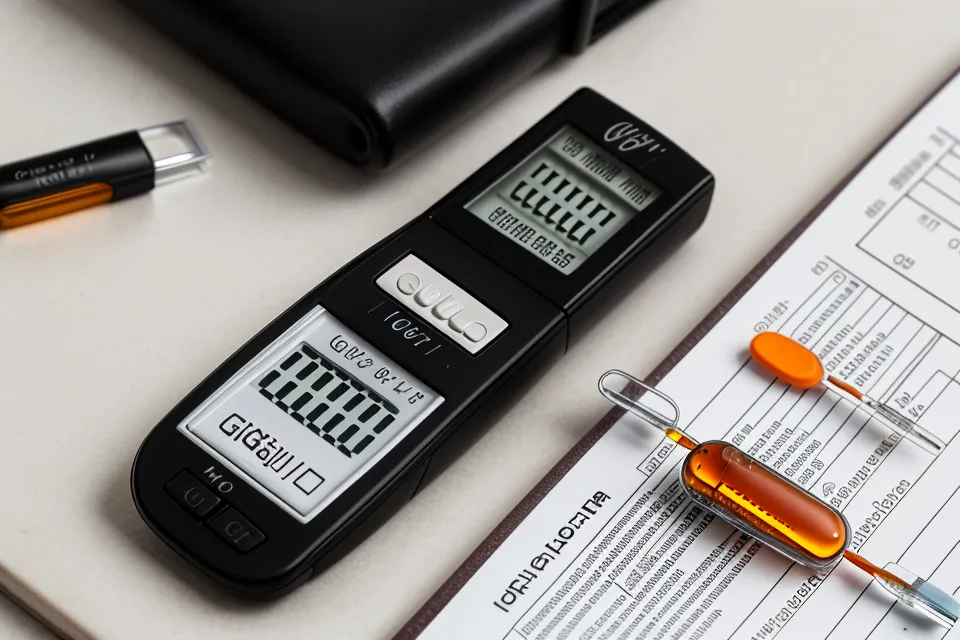
Gluco6 is the capsule option, built around chromium and an ingredient called Sukre rather than the usual cinnamon-and-call-it-done formula. I switched over to testing it only after a clean washout stretch — my numbers went haywire the one time I stacked two products back to back, and that mess taught me to separate my tests properly. Gluco6's Chromium-based approach reads as steadier and less dramatic than the liquid drops — fewer big swings, a flatter baseline — which is exactly the kind of result that gets dismissed by someone doing the one-reading test. Its guarantee window is 60 days, shorter than Sugar Defender's, and it carries a higher price point with fewer independent reviews floating around, which matters if you like to see other people's spreadsheets before trusting your own.
GlucoBerry takes the narrowest approach of the three, built around a single standout ingredient — Maqui berry extract — instead of a long list. It's the budget pick in the lineup, not because the goal is cheap but because the focus is narrow: one job, done with one main ingredient, dosed once a day. Results on this one took noticeably longer to settle into a pattern than the other two, which is worth knowing going in so you don't quit on it the way most people quit on the single-reading test. I laid out the head-to-head numbers in more detail in Gluco6 vs. GlucoBerry if you want the full comparison.
Treat Every Test Like a Controlled Experiment, Not a Hunch
Over lunch at Hudson Grille on Roswell Road, I mentioned to Randall Kovic — a business acquaintance who tracks his own numbers about as obsessively as I do — that I'd started a new bottle that week. He didn't ask how I felt. He asked to see the spreadsheet, which is exactly the right question and exactly the one most people skip. Randall doesn't trust a supplement claim until he sees the data himself, and honestly, neither should you.
Label skepticism belongs in that same controlled-experiment mindset — I've gotten burned trusting a front-of-bottle claim that didn't match what the actual ingredient panel said, which is its own lesson in reading past the marketing copy. Where you buy matters almost as much as what you buy, since a supplement ordered from somewhere other than the official source isn't necessarily the same formula you tested. Hydration plays a quieter role too; running dehydrated can push a fasting number up independent of anything you're taking, which is one more variable that has nothing to do with the bottle. And if a supplement does seem to be working, don't assume that's permanent — I've watched numbers drift back once a product got discontinued, which tells you the bottle was doing something, not that you'd fixed anything for good.
A reader named Donna Hirsch emailed me a batch of questions once, numbered one through six like she was auditing my spreadsheet, and more than half of them boiled down to the same thing underneath different wording: how do you actually know the supplement did it? That's the right instinct. My own worst miss was simpler than any supplement question — I switched to whole-wheat bread at one point and assumed that alone had fixed my numbers, when really I'd just gotten lucky on a stretch where several other things lined up too. Swapping one ingredient and calling it solved is the same mistake as judging a supplement off one reading. It's a hunch wearing a lab coat.
The Trade-off Nobody Puts on the Label
The real trade-off isn't speed versus stability by brand — it's complexity versus focus. A blend built from two dozen ingredients is going after the problem from several angles at once, which tends to show up faster across a wider range of readings. A formula built around one or two standout ingredients is making a narrower bet, and it tends to take longer to prove itself but can land harder on the one specific thing it targets. Neither approach is objectively better; it depends on whether your numbers need a broad nudge or a specific fix. (Delivery format — liquid versus capsule — is a separate variable layered on top of that, and I've got a whole piece comparing the two formats if you want to go deeper there.) I leave the ingredient-by-ingredient mechanics for that other piece too; here I only care what showed up on my own readings, which is why I ran Sugar Defender against Gluco6 side by side rather than just eyeballing it.

The Bottom Line From My Spreadsheet
If you're newly flagged and just want a place to start, give whatever you try a real stretch of mornings before you decide anything, and start with something that gives you room to actually run that experiment. For me that's been Sugar Defender — the liquid format plus a 180-day guarantee means you can test it properly instead of judging it off day three and quitting. That guarantee window is basically a free pass to do this the right way: track a baseline, give it time, and look at the trend instead of any single number.
None of this replaces the actual work — eating decently, moving around, sleeping enough — and it's definitely not a substitute for your doctor's input. But if you're going to spend money testing supplements anyway, test them like a business would evaluate a new vendor instead of like a lottery ticket. Check out the comparison below for how the three stacked up against each other in my own numbers.
| Product | Rating | |
|---|---|---|
| Sugar Defender Top Pick | 9.4 | Read More → |
| Gluco6 | 8.8 | Read More → |
| GlucoBerry | 8.2 | Read More → |
Sugar Defender
Pros
- ✓ Liquid drops absorb way faster than my old capsules
- ✓ No synthetic fillers to mess with my readings
- ✓ 180-day guarantee is a huge safety net for testing
- ✓ Kept my post-meal spikes much more manageable
Cons
- ○ Only available online through their official site
- ○ The dropper can be messy if you are in a rush
This site documents one person's experience and should not be treated as expert advice. Your circumstances are unique — please consult a qualified professional before making any decisions about your health or finances.