
A hundred and fifteen. That's the fasting glucose number, in milligrams per deciliter, that splits my own prediabetes tracking into two completely different columns: one built on supplement capsules, the other built on two plain daily habits. Only one of those columns consistently lands under that number. This isn't a story about curing anything. It's a side-by-side look at what actually moved my A1C management numbers and what mostly moved money out of my checking account.
I've gone deep elsewhere into what that A1C number is actually built on — it comes down to glycated hemoglobin, which amounts to a backward-looking average rather than a single snapshot — and into where a normal fasting baseline tends to sit before any of this starts. Crossing that prediabetes line gets more common once you're past fifty, which is its own topic I've covered separately. None of that background is really the point here. The point is two approaches, judged against the same blood-sugar-tracking numbers, on the same meter.
Column One: What a Shelf of Supplements Actually Delivered
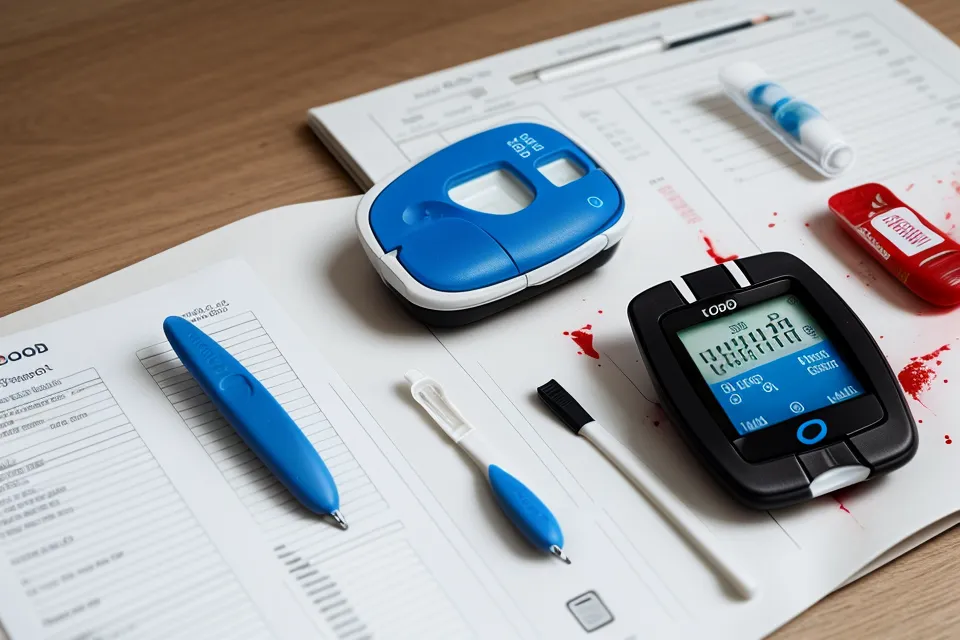
The capsule column is the one most people expect to see first: berberine, Ceylon cinnamon, chromium picolinate, lined up like inventory nobody asked me to order. Testing them meant running something close to a formal protocol — a fasting reading, the capsule, then checks two hours after lunch and two hours after dinner, logged into the spreadsheet my wife now calls my second job. (If you're setting up your own version of this, I already wrote up the Common Mistakes When Using a Home Glucose Meter for the First Time, mostly so you can skip the fumbling I didn't.) Berberine was the only one that moved anything I'd trust — shaving maybe five to ten points off a post-meal spike when I took it ahead of a heavier plate. Cinnamon and chromium, in my own numbers, did close to nothing I could separate from ordinary daily noise.
None of those capsules, though, did anything about the inputs I wasn't questioning in the first place. I found that out the day a green juice I'd assumed was a healthy purchase sent my meter somewhere I wasn't expecting — the label, once I actually read it the way I used to read vendor contracts, told a different story than the marketing on the front of the bottle. That's really the whole case against treating supplements as the main line item: they don't audit your choices for you. They just sit quietly on the counter while you keep making the same ones.
Column Two: The Lifestyle Changes That Cost No Credit Card
Column two cost nothing extra and didn't ask me to swallow anything. The first habit was food order — vegetables and a vinegar-dressed salad first, protein and fat next, whatever carbohydrate was on the plate dead last, which is really just a slower, kitchen-table version of the vinegar-trick experiments other trackers run. In my own log, that sequencing blunted post-meal spikes more reliably than any capsule managed. The second habit was a walk, not a run — fifteen minutes at an easy pace on the trail at Chastain Park in Buckhead, started within twenty minutes of finishing dinner, which in my numbers dropped the post-meal spike by twenty to thirty points compared to sitting on the sofa answering emails. Exercise is its own confounding variable in any of this tracking, worth separating out if you're running the comparison yourself.

Randall Kovic, a business acquaintance of mine, put a name to what I'd been circling around before I had the words for it. He treats almost every health decision as a return on time rather than a return on money, and once I borrowed that frame, the comparison got easier to run: the capsule column carried a real dollar cost and an uncertain payoff, while the habit column carried a real time cost and a payoff I could see on the meter the same day I made the change.
Why the Zero-Carb Shortcut Backfired
Not every change earns its spot on the ledger. Slashing carbohydrates close to zero — eggs, meat, greens, nothing else — flattened my post-meal numbers, but my fasting readings started climbing instead of falling, eventually settling worse than where moderate carbs had left me. The textbooks file that reaction under gluconeogenesis, and I'll leave the actual mechanism to people with the credentials to explain it properly. What matters for this comparison is simpler: an extreme version of "cutting" backfired the same way an extreme cost-cutting move backfires on a business — you save on one line and pay for it somewhere else on the statement.
Neither Column Replaces the Other
None of the habit experiments worked either, and that's worth saying plainly before this starts sounding like habits always win. Cutting soda outright seemed like the obvious move, so I did it, then started leaning on smoothies instead, assuming fruit was the safer swap. My post-meal numbers disagreed — the smoothies spiked me higher than the soda ever had. That failure belongs in the same bucket as the capsule column's weak return: both prove that the label on an intervention, "natural," "quick fix," "healthy swap," tells you nothing until you check it against your own meter.
A reader named Donna Hirsch emailed me a while back, not long after my original piece on getting flagged with a high A1C went up, and she still quotes her doctor's exact words every time she writes in with an update, which, honestly, is a better habit than most of what I tested. Her question lines up with this whole comparison: once you stop the capsules, does the number creep back? In my own tracking, dropping the weaker supplements changed almost nothing, which is its own answer about how little they were doing to begin with. A bad night of sleep or a genuinely stressful stretch at work moved my fasting number more than cutting chromium ever did — confounders worth tracking in their own right, and ones I've mapped separately, along with how these two columns feel physically, in Symptoms of High Blood Sugar and How to Track Them Daily.
Run the Comparison on Your Own Numbers Before You Choose
Here's the trade-off, stated plainly instead of buried in a story. Choose the supplement column when you want a low-effort starting point and you're honestly willing to count a modest five-to-ten-point improvement as a win — it's not nothing, it just isn't the main event. Choose the habit column, food order plus a short walk after eating, when you want the bigger, more reliable movement on your meter and you're willing to trade a few minutes a day instead of a credit card swipe. In my own numbers, the habit column did the heavier lifting, and the capsules ended up as a minor line item rather than the strategy itself. Run your own version before committing to either one — your fasting baseline, your meter, and a stretch of honest logging will tell you faster than any article can, mine included.
This doesn't make me a doctor, an endocrinologist, or any kind of health professional — I'm a business owner who happens to be compulsive about spreadsheets. Your own metabolism runs under different constraints than mine, so loop in your own doctor before changing your diet, your exercise, or anything you've been prescribed. But if your numbers are drifting the wrong direction, you don't need an expensive shortcut to start the comparison. You need a meter, a place to log it, and the willingness to look honestly at both columns before deciding which one earns the bigger line item in your own operation.
This site documents one person's experience and should not be treated as expert advice. Your circumstances are unique — please consult a qualified professional before making any decisions about your health or finances.